All posts by Tanstaafl

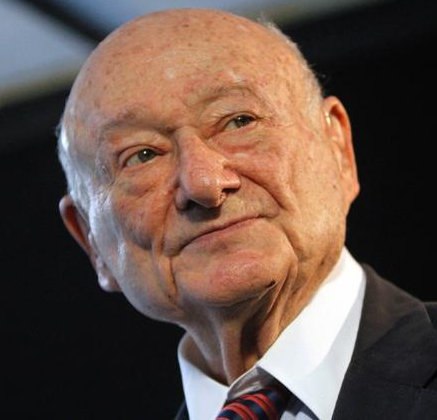
Ed Koch and Liberalism

Koch’s headstone: ‘My father is Jewish, my mother is Jewish, I am Jewish.’

The New York Daily News says Koch wanted his identity as a jew to be a central and lasting part of his legacy, citing Koch’s HuffPo article from Jan 2011, What’s on My Tombstone, and Why:

The United States, France and Israel ought to form a special unit devoted to running each of [Daniel Pearl’s] terrorist murders down and target them for execution. The Israeli Mossad did exactly that with the Munich murderers of the Israeli Olympic team killed in Munich in 1972.

On my tombstone, which awaits me at the Trinity Church nondenominational cemetery at 155th Street and Amsterdam Avenue, I had inscribed the last words of Daniel Pearl — uttered at his publicly viewed murder — which were, “My father is Jewish. My mother is Jewish. I am Jewish.” I believe those words should be part of the annual services on the Jewish High Holiday of Yom Kippur, and should be repeated by the congregants.

Koch was not only speaking for or about himself. He was speaking to fellow jews, for their benefit.

Though Koch came to fame as the mayor of New York between 1978 and 1989, in recent years he made it increasingly obvious that he was most obsessed with the narrow interests of jews. When he expressed his opinion in public, it was often plainly in this context.

On at least two occasions (see here and here) Koch identified others as bigots. As is typical of jewish bigotry, in both cases it was more a reflection of his own hyper-sensitive ethnocentrism. As is also typical, nobody of any stature in media or politics dared criticize “liberal” Koch for his increasingly blatant illiberalism.

While many of the obituaries and editorials I have surveyed remarked with some circumspect on Koch’s queer brand of “liberalism”, only a few noted Koch’s jew-first priority, and none put the two together in critical terms. John Podhoretz, a jew more often identified as “conservative”, opined glowingly at the New York Post that Ed Koch was a liberal who defied left on ‘nuts’ ideas. Though Podhoretz shares the same very jewish concerns which animated Koch, he made no mention of it. Instead Podhoretz focused entirely on an earlier era, casting Koch’s legacy in partisan political terms which make even less sense today than they did at the time. What Koch’s career best demonstrates is how jewish identity transcends silly partisan affliations.

Contrast this with Robert Byrd, who even before death was regularly condemned as a “racist”. When Byrd died it wasn’t hard to find “conservatives” complaining, for example, that Byrd’s KKK History Shows Partisan Double Standard.

Of course, the most glaring double standard isn’t partisan, it’s jewish – it clearly distinguishes jews from Whites. The idea is that nobody, and especially not tolerant “liberals”, should tolerate White bigotry. If you are now or ever have been a member of a special unit devoted to serving White interests, like the KKK, that’s considered inexcusable grounds for exclusion, censure, condemnation, etc. On the other hand, as we see with how the former so-called “King of New York” is treated, openly advocating for the best interests of jews, even to the point of calling for murder squads to hunt down and execute your enemies – well, jews will be jews. Nothing special. Not even for “liberals”.

The Preoccupations of Takuan Seiyo

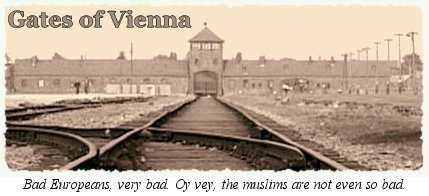
Last week Gates of Vienna administrator Baron Bodissey introduced Here We Go Again like so:

Certain posts at Gates of Vienna, among them those by Takuan Seiyo, tend to attract the attention and comments of people who are preoccupied with the Jews. They frequently refer to “Holohoax” in World War Two, often supplementing their scornful references with obscenities or derogatory epithets.

I generally delete such comments without publishing them. One of them came in this morning, the second or third such screed submitted on Takuan Seiyo’s latest post. Before I deleted it, I sent it to Takuan, just to show him what was coming in. He suggested that I go ahead and post it, followed by his response.

Takuan Seiyo claims to be 50% Pole and behaves as if he’s 150% jew. His hostility towards Whites naturally provokes a hostile reaction from Whites. Bodissey invites this reaction. He has draped his site with European imagery and presents its mission as a defense of “Christian Europe”. Then he publishes articles, especially by Seiyo, and comments, especially from self-righteous jews, advocating in favor of jews even when their concerns conflict with the best interests of Whites.

In this particular article, Seiyo wrote:

I will deal in a later chapter with the issue of White Nats’ desperate massaging of Holocaust history as an attempt to wrest Western history from what, to them, should have been the losers, in order to place the skein of narrative back in the hands of what ought to have been the winners, that is, “white people.” They don’t quite get that WW2 is a story of the ultimate triumph of Western Civilization and of Whites, and that there is no need at all to lie or fall prey to wishful delusions. The losers who wrested the skein of history are not “the Jews” or “the coloreds” but white Marxists-Socialist professors in the 1960s.

In The Bee and the Lamb, Part 9 (Continued), posted earlier the same day, Seiyo wrote:

For over 60 years, White mea-culpists have had a firm grip in all fields of cultural mind imprinting: education high and low; paper media, then electronic, then digital media; all forms of entertainment, the plastic arts and music high and low, and religious instruction and worship too. Their main endeavor has been to enforce their compulsory (e.g. K-12) and discretionary (e.g. television) self-flaying on account of long-ago Slavery, Colonialism, Imperialism, Male Supremacism, Racism, Antisemitism, and so on.

These are perfectly typical examples of Seiyo’s preoccupation with blaming Whites while excusing jews. He has been doing it for some time. In July 2010 The Brussels Journal published From Meccania To Atlantis – Part 17: Shotgun Marriage In Europe. In it Seiyo explained how his overriding concern for jews keeps him from caring much about Whites:

It may go on for another 20, 30 , 50 years, until a magic orator appears who will galvanize a cold, reserved and quietly unhappy people the way Hitler did the Germans. After all, what Eurabia has pushed itself into is nothing if not Hitler’s revenge anyway. The whole landmass kowtows to Jew-hating Muslims because of what it once did to the Jews. It’s one of those ironies that Jews have been destined to bear since the dawn of their history (5).

Some contest the Hitler revenge theory by pointing out that Sweden — perhaps the most self-disemboweling country in Europe — had no part in the Holocaust. But they forget that Jews were not allowed to live in Sweden before 1782, their emancipation did not arrive until 1870, widespread antisemitic sentiments were common well into mid-20th century, with the remarkable actions of Wallenberg and Bernadotte acting as a counterfoil to a popular sentiment that until the end of 1942 had closed off Sweden to Jewish refugees from Nazi persecution, produced antisemitic student protests, and gave rise to the Swedish Anti-Jewish Action League (Sveriges Antijudiska Kampförbund) founded by Einar Åberg. It’s germane that the law prohibiting “incitement against an ethnic group” under which the Swedish state prosecutes its anti-Islamization dissidents was enacted due to Åberg’s widespread antisemitic activities in the late 1940s and 1950s.

Out of one side of his mouth Seiyo paints Whites as “self-flaying” and “self-disemboweling”, denying jews play any part. Out of the other side, he paints jews as blameless victims of White persecution. Either way he doesn’t sympathize with Whites, and when confronted by anyone who does he makes his contempt and distaste plain.

Similar attitudes have long prevailed at Gates of Vienna. On 12 Jan 2013, Bodissey posted Confronting the New Fascism in Sweden, which presents a Seiyo-like view of “self-flaying” Swedes being to blame for the anti-Swedish politics and media in Sweden:

Never has the power of projection been more evident than in the political culture of Sweden. From an outsider’s perspective, Sweden displays all the attributes of a fascist state: only one political point of view is considered acceptable, and any dissent against it is vigorously punished, by both official and unofficial means. Those who oppose the reigning ideology may lose their jobs or be prosecuted. They are vilified and scapegoated in the (largely state-owned) media to the point where compliant Swedish drones are made to understand that all dissidents are fair game, and deserve anything bad that happens to them.

Now, that sounds like fascism to me. But the Swedish media reserve the term for Sverigedemokraterna (the Sweden Democrats, SD), the only significant political party that opposes mass immigration and challenges the reigning Multicultural ideology.

Bodissey’s “outsider’s perspective”, with “fascism” as the key, is facilitated by a Seiyo-like blindness to the jews in Swedish media and the who, how and why behind “the reigning Multicultural ideology”.

Though Bodissey averts his eyes, in this case it’s hard to ignore the jews. The article he criticizes is also Seiyo-like, in that it’s all about the threat “fascist” Whites pose to jews.

A commenter tries to square the circle, Gates of Vienna style, by unselfconsciously explaining:

The repeated invocation of Jews, Nazis and the Holocaust in his attempt to hammer home his contention that the Swedish Democrats are wicked evil people with an inhumane agenda. Time and time again the primary school teacher appropriates the tragedy of mid C20th Jewish experience for polemic gain. The disgusting reality of course is that the Swedish Left, as with the Left of the entire Western world, is the driving force of hysterical and venomous anti-Israeli, anti-Zionist and, they can deny it ’til they’re blue in the face (but no sensible adult would accept such denials), anti-Jewish rhetoric.

In other words, Whites are correct to see sob stories about the jews as anti-White. These are hysterical, venomous attempts to hammer home the contention that Whites are wicked evil people with an inhumane agenda. That’s certainly a fitting interpretation of Seiyo’s efforts. Bodissey, by giving Seiyo and like-minded commenters a platform while squelching their pro-White critics, aids and abets it.

The Rise of the Rootless Cosmopolitan Globalist Elite

Ethnic origins of US attendees of 2013 World Economic Forum in Davos, race/history/evolution notes, 24 Jan 2013:

Starting from this list of Davos attendees, I’ve attempted to quickly classify the 711 “USA” individuals by racial or ethnic ancestry.

This is a very rough draft, but the initial breakdown I come up with is:

46.69% Northwestern European
27.43% Jewish
6.05% Southern European
5.49% South Asian
3.80% Middle Eastern
3.38% Latin America / Brazil
3.23% East Asian
2.25% Eastern European
1.55% Black
0.14% North American Indian

2010 Forbes 400 by ethnic origins, race/history/evolution notes, 24 Sep 2010:

Forbes has published its list of the 400 richest Americans for this year. My current estimate of the ethnic breakdown of the list is shown in the far right column below:

1987 (%) 2009 (%) 2010 (%)
Northwestern European 72 52 50.5
Jewish 23 35.75 36
Italian 2.25 3.5 4.25
East Asian 0.25 2.0 2.0
Middle Eastern 1.5 1.75 2.0
Greek 0.5 1.5 1.75
Eastern European 0.25 1.5 1.75
South Asian 0.0 1.25 1.0
Hispanic 0.25 0.5 0.5
Black 0.0 0.25 0.25

The 2009 estimate is also mine, and I have used the same methodology as before. The 1987 estimate is Nathaniel Weyl’s. The first thing I notice is that the Northwestern European proportion of the list continues to decline.

At least 139 of the Forbes 400 are Jewish (34.75%), JTA, 5 Oct 2009:

This list is by no means an exact science. But those who we considered Jewish were those who were of Jewish descent or those who openly identified as Jews either personally or in thier giving.

The Rise of the New Global Elite, by Chrystia Freeland, The Atlantic, Jan 2011:

What is more relevant to our times, though, is that the rich of today are also different from the rich of yesterday. Our light-speed, globally connected economy has led to the rise of a new super-elite that consists, to a notable degree, of first- and second-generation wealth. Its members are hardworking, highly educated, jet-setting meritocrats who feel they are the deserving winners of a tough, worldwide economic competition—and many of them, as a result, have an ambivalent attitude toward those of us who didn’t succeed so spectacularly. Perhaps most noteworthy, they are becoming a transglobal community of peers who have more in common with one another than with their countrymen back home. Whether they maintain primary residences in New York or Hong Kong, Moscow or Mumbai, today’s super-rich are increasingly a nation unto themselves.

The Rise of the Super-Rich Is a Global Phenomenon, Chrystia Freeland, Yahoo! Finance, 16 Oct 2012:

The growing gap between the top 1% and the rest of the U.S. population has emerged as a major issue in this year’s presidential campaign, but it’s not likely to narrow much no matter who wins, says Chrystia Freeland, author of the new book Plutocrats: The Rise of the New Global Super-Rich and the Fall of Everyone Else.

As the title suggests, “the increase in income inequality” in the U.S. is not just a domestic development but “is happening in all Western industrialized countries,” Freeland tells The Daily Ticker in the accompanying interview. “And crucially you’re seeing the same phenomenon in the big emerging market economies.”

Freeland says globalization is at the root of income inequality around the world. Both capital and labor are global therefore businesses leaders must maintain a global perspective, says Freeland.

“Inevitably that means the super-elite see themselves as citizens of planet earth” rather than as a citizen of their home country, which means they are less concerned with the health of the middle class in the U.S. or any other country they call home.

In the U.S. the gap between the very rich and everyone else “is wider than at any time since the gilded age,” says Freeland.

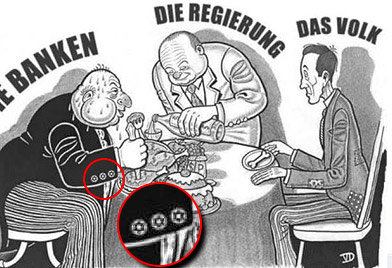
Image source: World Jewish Congress – Far-right party leader in Austria lambasted for posting anti-Semitic cartoon on Facebook.

Ian Jobling: Good Riddance to Bad Rubbish

In November 2012, Ian Jobling was interviewed by the Southern Poverty Law Center.

When Jobling shuttered his website in May 2010, Hunter Wallace provided a synopsis of Jobling’s brief race-realist-ish career in White America, R.I.P.:

The saga began in 2006 when Ian Jobling and Mike Berman broke with Jared Taylor over his refusal to anathematize anti-Semites to their satisfaction. This can be traced back to the infamous David Duke/Michael Hart confrontation at the 2006 Amren conference. In the wake of that incident, Jobling and Berman circulated a letter which condemned Duke and anti-Semitism. If memory serves, they were displeased with Taylor’s response and launched “The Inverted World” in protest.

Mike Berman quit the project early on because (of all things) The Inverted World was not philo-Semitic enough for his tastes. Jobling spent the next few years supporting the Iraq War and attacking various prominent figures in the pro-White movement. His website targeted David Duke, Jared Taylor, Kevin MacDonald, and Frank Salter.

In 2009, The Inverted World evolved in White America, which was the same project under a new name.

I disagree with Wallace’s final analysis:

There was nothing wrong with White America. Jobling’s problem was that he didn’t have the temperament to build a successful website.

Jobling’s problem, from a pro-White point of view, was that he was a dissembler and dissimulator. He waved a pro-“white” banner and tried to tell Whites what to do, while his main priority, all along, was to fight “anti-semitism”. From his time at AmRen onward Jobling was pretending to be something he wasn’t. He could have called his own web site “Support Jews America” or “Jew-First America”. That’s what he was about. The mainstream is full of such organizations. Jobling deliberately went outside the mainstream, striking a pose in opposition to “liberalism” and “leukophobia“, only to spend a great deal of his effort attacking pro-Whites who most cogently distinguish and explain the role played by jews.

I have commented on Jobling a few times, mostly in association with others who behave similarly, like Lawrence Auster and Guy White. Unamused is another more recent but less zealous example.

I described my last and most direct exchange with Jobling in The Urge to Purge, in October 2008.

Jobling saw race through a polarized, black/white lens. This is common in the race-realist, human biodiversity (HBD), men’s rights and black run America (BRA) spheres. Even in such places, where racial traits and conflicts of interest are often otherwise relatively freely discussed, many people simply refuse to think or talk about jews. Others more or less actively defend jews, and do so even when their interests conflict with Whites. Jobling was this latter type.

Jobling’s view of the relationship between Whites and jews went beyond simple blindness. As I alluded above, he wrote volumes about “liberalism” and “leukophobia”. He stared directly at Marx and Freud and others who have done and continue to do similarly destructive work. He even read and wrote about Culture of Critique. Yet somehow his self-imagined analytical mind and interest in human behavior could never accept any significant difference between Whites and jews, biological or otherwise.

Actually, that’s not entirely correct. Jobling did see a significant difference between Whites and jews. On his now defunct Inverted World/White America website, Jobling blamed Whites while excusing jews. At least some of the content is preserved at archive.org.

Principles of the Pro-White Movement is typical of Jobling’s dismal brand of “white” advocacy:

Carrying on the dismal tradition of American white supremacism, most pro-whites today believe our current racial dispossession is due to Jewish influence on the West, if not actual Jewish conspiracies against whites. However, these tired lies conceal the real dynamics of white dispossession, which has been inflicted by white Gentiles on themselves. While it is true that Jews have been inclined towards highly liberal—that is, leukophobic—beliefs, nevertheless more than 90 percent of white racial liberals are Gentiles. Moreover, that Jewish leukophobia could thrive in America suggests that it was a mere extension of something in our national character. For these reasons, the pro-white movement repudiates anti-Semitism and will resolutely oppose the obsession with Jews that poisons and discredits our cause.

The portion of the text emphasized above is the only portion of the entire essay Jobling so elevated.

Drawing a clear distinction between Whites and jews, Jobling claims that jews aren’t to blame for “our current racial dispossession”, because it is “inflicted by white Gentiles on themselves”. This is the suicide meme. Note the subtle inconsistency in Jobling’s use of “our” and “themselves”, as if he doesn’t see himself as a “white Gentile”. For a self-described pro-“white” who can’t bring himself to capitalize White, it’s odd that he cares enough to capitalize gentile.

His two links showcase an uncanny ability to look directly at the hostility of jews against Whites before dismissing it.

The “Jewish influence on the West” link takes you to Jobling’s cockeyed review of Kevin MacDonald’s Culture of Critique, Did the Jews Do It?:

Summarizing CoC is difficult, as it has two theses, one overt and one covert. The overt thesis is that a number of major 20th century intellectual and political movements—racial egalitarianism, Freudianism, Marxism, and advocacy of open borders—have been vehicles of Jewish ethnic interests. This thesis is supported by copious and convincing evidence. The covert thesis, which is never fully avowed or openly argued for, is much more ambitious. MacDonald would have us believe that Jewish activism is the major cause of the forces that he believes is bringing down the West: multiculturalism, mass non-white immigration, and the taboo against white racial identity. This thesis is manifestly implausible. MacDonald’s book is, in fact, an emotional, extravagant, and unsubstantiated indictment of Jews covered by a veneer of scholarship.

Jobling admits that MacDonald’s exposition of jewish hostility toward Whites is very convincing. He simply cannot accept it. At such a loss for an argument of his own he grabs the nearest one at hand. He takes the typical jewish intellectual behavior MacDonald so well documented and imputes it to MacDonald instead.

If MacDonald had confined himself to exploring the ethnic dimension of these movements, no reasonable person could object to his book. However, MacDonald’s real ambition is to convince us that the movements he discusses bear the majority of the blame for multiculturalism and all its attendant phenomena.

MacDonald introduces this agenda into the book through hints and implications, rather than overt argument. The sneaky, two-faced character of CoC is evident in his response to Paul Gottfried, who criticized MacDonald for laying excessive blame on Jews for the cultural changes in the West since 1950.

Here Jobling doesn’t act reasonable. The sneaky, two-faced character he sees is only a reflection of his own bias. MacDonald confines himself and Jobling still manages to get upset, even though he must claim to read MacDonald’s mind so he can do so.

Paul Gottfried is a jew who dissembles about jews, “whites” and “liberalism” in the same vein Jobling and Auster have.

There is a simple, but, I believe, devastating counter-argument to MacDonald’s theory. If the Jewish/Gentile dynamic that MacDonald outlines is rooted in these groups’ biological natures, and Jews have extensive powers to convert Gentiles to multiculturalism, why didn’t anything like multiculturalism emerge before the 20th century? Jews have been present in the West since Roman times, but Gentiles in medieval European societies did not believe in white guilt, nor did they think diversity was a strength, despite the presence of Jewish minorities—indeed, multiculturalism was not only non-existent in medieval Europe, it was unthinkable. That almost all Gentile societies containing Jewish minorities have remained strongly ethnocentric is evidence that Jews have little power to weaken Gentiles’ confidence in themselves.

Jobling never quotes MacDonald explaining MacDonald’s theory.

The main value in MacDonald’s work is in the facts he gathers and lays out – the names, dates and quotes – exposing historic hostility and aggression of jews against Whites. Those, like Jobling, who make a big stink about MacDonald’s motives or theories seem most intent on distracting attention away from what he documents.

Jobling’s implication that jews haven’t lobbied for special rights, or in favor of more general principles like pluralism, tolerance, equality, diversity (the hallmarks of modern multiculturalism), or that this never contributed to the collapse of the societies hosting them before the 20th century, is absurd. If he had looked a bit harder he could have found evidence for it in Rome (see particularly the bits about “jewish rights” and what Tacitus had to say). There have been copious examples in Europe since.

Before Rome and beyond Europe there were Babylon, Assyria, Egypt, Greece, Macedonia and more. A study of the history of people tolerating jews living amongst them teaches two lessons: 1) The jews can be counted on to do a good job looking after themselves, and 2) everyone else could do a better job.

The contemporary guilt-tripping of Whites is a case in point. It traces directly back to the emancipation of jews in Europe. The undoing of European rule over European societies proceeded apace once jews were granted equal access to citizenship and the ruling class. The cries of jews against “discrimination” and “hate”, openly aimed at Europeans as early as the late 1700s, are echoed today in the service of every other imaginable “oppressed” “minority”.

The tendency to blame Whites, which Jobling noted in his SPLC interview, began in earnest only after the jews were emancipated. Jews have consistently blamed Whites for every problem created by their integration, and before. The basic mechanism is still the same today. The use of “racism” as shorthand for “Whites are to blame” is simply a generalization of how jews, and Jobling, use the term “anti-semitism”.

Jobling’s second link, “Jewish conspiracies against whites”, takes you to his article, The Insanity of David Duke.

What Jobling actually tries to explain is why he thinks “the racial right in America is fundamentally insane” using “the worldview of David Duke”. The most important part of that worldview, from Jobling’s point of view, is what he describes as Duke’s “theory that Israel was complicit in the 9/11 attacks”. (The only surviving link to Duke is How Israeli terrorism and American treason caused the September 11 Attacks.)

It would be easy to prove that this theory is merely wrong, but I am making a much stronger claim: that this theory is the product of a mind that has lost touch with the principles of reason, a mind that is so maddened by hatred of Jews that it obsessively and irrationally twists everything that it dislikes about the present and the past into evidence of Jewish evil. Because Duke is so popular with the racial right, his views are a good indication of those of the broader community.

Once again Jobling goes on the warpath, not against the facts or Duke’s arguments, but against his own theories, projecting his own maddened hatred onto Duke. He is so disturbed by Duke that he does not try to address what he says directly. He just wants to blot him out. Losing touch with the principles of reason he irrationally twists what Duke argues into evidence that the entire “racial right in America” is fundamentally insane.

Here and elsewhere Jobling regularly “proved” things that were clearly a matter of opinion – usually what he proved was that his opinion about someone else’s opinion was worthless.

Turning now to what Jobling had to say in his SPLC interview, we find that one reason he finally gave up his pro-“white” schtick is that he just couldn’t abide Whites having the kind of nationalism jews have:

In the wake of 9/11, there were a lot of people saying the U. S. was at fault for the attacks, that they were somehow justified by U.S. policies toward Israel. I didn’t buy that argument. And that’s why I got the idea that everyone blamed whites first — that there was an inclination to blame white people even though a non-white was to blame.

A part of white nationalism that I really never bought into but I just sort of agreed with because of the people around me is the idea of ethnonationalism — that it’s natural for people to align with their own race and to work in their own race’s interests. And if you don’t do that, there’s something wrong with you and if you don’t defend your own race’s interests, you’re just going to be victimized by other races because those other races have it together, right? The idea is we are organized by race and we all are meant to work in our race’s interest.

So this is really the heart of white nationalism and the major scholarly exponent of this idea today is Kevin MacDonald. And also J. P. Rushton. And Taylor was popularizing these wrongheaded ideas.

A major source of contention between us [Jared Taylor and Jobling] was the Iraq War. I was a supporter, which may well have been the wrong position. I basically bought into the Bush administration’s line. I believed in the idea of trying to establish a liberal democratic nation in Iraq.

Taylor doesn’t believe in those ideals, not at all. He took this very simple-minded nationalist viewpoint, that we should allow other nations their sovereignty. I always basically agreed with liberal democratic ideals. My concerns about non-white immigration were that immigrants did not believe in those ideals, so we needed to retain a white nation so we can go on being a liberal democracy. That was very, very different from what Taylor believed.

To my knowledge Jobling has never criticized jewish nationalism, and here we see his test drive with “white” nationalism was based on support for Israel and his view of jews as “white”. Ultimately however, he just “never bought into” nationalism for anyone but jews.

Jobling tried to argue that jews were really just like any other White ethnicity. As time went by it must have become as clear to him as it already was to many of the people arguing with him that the truth is the opposite. The modern “liberal” “leukophobic” democracy Jobling says he likes so much treats jews and Whites to different standards. In particular, nationalism for jews is treated completely differently from the nationalism of any European ethnicity.

France for the French is a perfectly reasonable statement most Whites would agree to without a second thought. But as Ian Jobling, the SPLC, and most jews will tell you, France for the French is nothing but a “far-right”, “racist”, “xenophobic”, “nazi” concept. If it means jews can’t hold any office and come or go as they please then it’s also unthinkably “anti-semitic”. At the same time, if you want to be US Secretary of Defense you must say you support Israel as a jewish state.

This undeniable reality completely undercuts Jobling’s core claim that jews are “white”, no different from the rest of us Whites. When push came to shove, Jobling gave up on both nationalism and “whites”. He goes on supporting Israel and jews.

What might motivate a man to argue and behave as Jobling does? There are some hints in his SPLC interview:

I grew up in Louisville, Ky. My mother teaches history and women’s studies at the University of Louisville. My parents divorced in 1974 and my father moved up to Canada, where he taught at a seminary. I went to the best private school in Louisville. Then I went to Amherst College.

My involvement with American Renaissance was incredibly hard on my family relationships. I still see my mother and father, but with my mother’s family, there was so much conflict there that I just stopped seeing them.

Both my parents, I think, did rather well about this. And chose to ignore it. The problem is hard — seriously disagreeing with a family member. Can they put that disagreement aside, to save the rest of the relationship? And both my mother and father managed to do that, [to] compartmentalize and segregate this whole problem. And they did manage to treat me as a son.

My mother’s family was obsessed with sorting out my life, however. They couldn’t get over it. It made for some very rough times and very snarky, hostile Thanksgivings.

Jobling never exhibited any religious basis (e.g. a Christian or Christian Zionist ideology) for his behavior. The impetus appears, by his own account, to come from within his family. Jobling’s description of his extended family, especially on his mother’s side, includes some characteristically jewish traits: academic, snarky, obsessed with sorting out his life, ultimately unable to get over his “white” activism.

It’s likely Jobling is at least partly jewish. Whether he is nor not, Whites probably haven’t seen the last of him, or for that matter, more like him. If Jobling does once again sally forth, nobody should be surprised if it’s to carry on the one consistent ambition he has always had – to fight for the jews.

Ian Jobling’s Homecoming

In November 2012, Jobling was interviewed by the Southern Poverty Law Center. One-Time American Renaissance Writer Ian Jobling Repudiates Racist Editor Jared Taylor. Jobling-related web documents have a tendency to go away, so I’m archiving the exchange here, no blockquote.

Can you tell us a little about your childhood?

I grew up in Louisville, Ky. My mother teaches history and women’s studies at the University of Louisville. My parents divorced in 1974 and my father moved up to Canada, where he taught at a seminary. I went to the best private school in Louisville. Then I went to Amherst College.

I’ve read the Southern Poverty Law Center’s stories about neo-Nazis and other really extreme racists, and my background is really quite different from theirs. I didn’t publish songs about killing Jews. I didn’t beat up any black people. I basically did research on crime and education as they relate to race.

How did you end up going from a Ph.D. program to white nationalism?

Starting around 2002, I was still in grad school. I was really very unhappy there. It was plain that I wasn’t going to get a job in the academy. White nationalism was a position totally opposite to everything that I had known up to that point. The ideas coincided with my inclination and interests in a number of ways.

One thing that I was very angry about was what I called cultural egalitarianism, the idea that there is no superior or inferior culture. Everyone is sort of just different and we should be nonjudgmental and tolerant of everything. That I didn’t agree with, and I still don’t. I thought Western culture to be superior in certain ways and that an argument could be made for that. And I was very interested in evolutionary psychology, which studies the relationship between genetics and behavior. It was through that work that I came into contact with racial difference research by [race scientists] Jean-Philippe Rushton and [the late] Glayde Whitney.

Did you get to know them?

Yes, I reached out to them, met them and participated on listservs with them. And I was really quite impressed by them. For someone angry at the liberal culture of the academy, as I was, they had what I thought was a really good critique of what was going on there. So I became very attracted to these ideas, partly because of my frustration with academia.

The 9/11 attacks had something to do with it, too. In the wake of 9/11, there were a lot of people saying the U. S. was at fault for the attacks, that they were somehow justified by U.S. policies toward Israel. I didn’t buy that argument. And that’s why I got the idea that everyone blamed whites first — that there was an inclination to blame white people even though a non-white was to blame. I felt like non-whites were getting all sorts of special apologies and so, if that makes any sense, that was one of the things that really angered me and attracted me to white nationalism.

And it was personal, too. I lived in some pretty bad neighborhoods in Buffalo and was a victim of one robbery by a couple of black youths and another attempted robbery.

Had you run into racist ideas before graduate school?

I never encountered anything like that in my childhood. I don’t think I have ever met a skinhead in my whole entire life. I was part of an academic community that was transnational.

When was it that you started getting frustrated with the academy?

I’m someone who has an analytical mind. And it seemed that were no rules to literary criticism and a lot of advancement in that field had to do with sucking up and just not rocking the boat. For example, my interest in evolutionary psychology and in biological theories of human behavior was off the map in terms of ideas that people were using at that time. They were talking about Marx and Freud and such things.

I don’t think I should ever have gone to the academy really and some of my frustration was always sort of present.

How did you come to know Jared Taylor?

Glayde Whitney [who once wrote a fawning introduction to former Klan leader David Duke’s autobiography] was an especially big fan of American Renaissance. It wasn’t long after I came to know him that I published my first essay. There’s actually an article in American Renaissance about my conversion. I was interested in evolutionary psychology, I guess, starting from 1997, and I came to think these are very bright people and not everything they tell you is false. And so I eventually became interested and persuaded by them about racial differences in intelligence, criminality, and so forth. I didn’t know Whitney was linked to Duke and I had no interest in anti-Semitism.

Tell us about your time at American Renaissance.

I joined in November of 2003 and learned Web design basically on the job. I put up the new amren.com website, which ran news stories. People would comment on them. I also would moderate comments. It was a very popular site. The comments had to be moderated to keep the anti-Semites out. And then I wrote articles, stuff Taylor wanted written about. I didn’t have a lot of discretion at any point in my career there.

The major project that I undertook was the revision of The Color of Crime [a booklet about racial differences in crime rates], which came out in 2005. I did all the research for that.

When did you start to question your commitment to white nationalism?

One thing you must understand is there are two basic strands to white nationalism. This is not generally understood. One strand relates to racial differences in intelligence and behavior. And especially research on black and white intelligence differences. There is some real substance in that research, though I’m no longer as convinced by all that stuff as I used to be. I took a body of research on black/white differences in intelligence and extrapolated from it wildly and irresponsibly into a general theory of white superiority over all other races.

What’s the other strand?

A part of white nationalism that I really never bought into but I just sort of agreed with because of the people around me is the idea of ethnonationalism — that it’s natural for people to align with their own race and to work in their own race’s interests. And if you don’t do that, there’s something wrong with you and if you don’t defend your own race’s interests, you’re just going to be victimized by other races because those other races have it together, right? The idea is we are organized by race and we all are meant to work in our race’s interest.

So this is really the heart of white nationalism and the major scholarly exponent of this idea today is [anti-Semitic theorist] Kevin MacDonald [who argues that Jews are genetically driven to undermine majority white societies by favoring such things as multiculturalism and non-white immigration]. And also J. P. Rushton. And Taylor was popularizing these wrongheaded ideas.

Did Taylor have any trepidation about associating with such a prominent anti-Semite as MacDonald?

Of course. He never alluded to Kevin MacDonald. He wanted to keep himself clear of that crowd. I came to see ethnonationalism as dumb and really dangerous. It’s basically the same mindset as Nazism, right? Hitler believed that different races had different interests and they were like organisms that were designed to work together. And they had to compete against each for world dominance. Hitler thought the Jews were getting the upper hand in the struggle, so something had to be done about that.

Taylor doesn’t believe in genocide. But the basic idea here is the same—there is a natural and a moral obligation to side with your own race and compete with other races. This is how he sees the world.

My other problem was that I came to see that most American Renaissance subscribers are Holocaust deniers. Some of them aren’t, but most of them are. It infuriated me because I think Holocaust denial is an evil conspiracy theory. I was always indignant about that and I never got any sympathy from Taylor. I always wanted American Renaissance to take a position against Holocaust denial as extreme anti-Semitism. But he always dismissed that concern in a rather smug and condescending manner.

What else did you find problematic?

One of the main arguments in The Color of Crime was that Latinos have these high crime rates. That means as Latin American immigration increases, America should grow more crime-ridden. But that isn’t happening. From 1990 to now, there’s been a reduction in crime, simultaneous with substantial [Latino] immigration. And so that link isn’t there. Taylor tended to downplay arguments like these that were inconsistent with his white nationalism.

There were other problems with The Color of Crime. If you look at crime statistics, they’ll show that blacks are 100 or 150 times more likely to commit assault against a white person than a white person is against a black person. And this is entirely true. This is what the statistics do say. And Taylor used this to try to make the argument that there’s a great hostility against whites amongst blacks.

But the argument is silly. If you’ve got a population which is 90% white and 10% black, whites are much more likely to encounter whites than blacks. And that means that any kind of crime, interracial crime, is going to be skewed by that likelihood of encounter. So what Taylor “discovered” — that blacks are supposedly more criminal than whites — didn’t have the ugly meaning that he attributed to it. Once you started adjusting for blacks as a minority, you found blacks were as likely to commit crimes against whites as they were against other blacks. No white nationalist story there. The second edition of Color of Crime, which I reworked, fixed some of these problems.

Why do you think Taylor plays ball with anti-Semites?

Taylor’s position always was we should just remain silent about Jewish issues. In an organization so rife with anti-Semites, that kind of silence is the same as complicity.

Taylor invites people who are associates of David Duke, like [Holocaust denier] Sam Dixon, to the conference. His personal associations are a problem to. He is close to Holocaust denier Mark Weber, who regularly stayed over at his house. There’s a kind of complicity there that maybe made him not see how anti-Semitism discredited us. Given Taylor’s ethnonationalist views, that people are naturally loyal to their race and naturally struggle against each other, well anti-Semitism naturally follows from that, right? But Taylor avoids the whole issue. I think Kevin MacDonald is just more intellectually honest than Taylor is.

How did your parents deal with your white nationalism?

My involvement with American Renaissance was incredibly hard on my family relationships. I still see my mother and father, but with my mother’s family, there was so much conflict there that I just stopped seeing them.

Both my parents, I think, did rather well about this. And chose to ignore it. The problem is hard — seriously disagreeing with a family member. Can they put that disagreement aside, to save the rest of the relationship? And both my mother and father managed to do that, [to] compartmentalize and segregate this whole problem. And they did manage to treat me as a son.

My mother’s family was obsessed with sorting out my life, however. They couldn’t get over it. It made for some very rough times and very snarky, hostile Thanksgivings.

What finally made you decide to move on?

After the 2006 conference, a bunch of us got together and wrote a letter to Taylor about anti-Semitism. I didn’t put my name on it. He was very upset by it and he published a snotty reaction, that he wasn’t going to be pushed around. It was over—I left.

We had other differences, too. A major source of contention between us was the Iraq War. I was a supporter, which may well have been the wrong position. I basically bought into the Bush administration’s line. I believed in the idea of trying to establish a liberal democratic nation in Iraq.

Taylor doesn’t believe in those ideals, not at all. He took this very simple-minded nationalist viewpoint, that we should allow other nations their sovereignty. I always basically agreed with liberal democratic ideals. My concerns about non-white immigration were that immigrants did not believe in those ideals, so we needed to retain a white nation so we can go on being a liberal democracy. That was very, very different from what Taylor believed.

What happened after you left American Renaissance?

I ran a website called “The Inverted World” for a while [that was against anti-Semitism but white nationalist]. I was still dedicated to the white nationalist cause. Some people accused me of being in the pay of Israel, called me a Jew-lover. It was sort of a mire and I got sick of it.

I now realize that it was really misguided. I had erected this whole theory of white superiority based on very limited evidence and believed that non-white immigration was going to cause the United States to become a Third World country. That wasn’t happening and I eventually recognized that.

I feel so much distance between me and that former self that I just wanted to put that behind me.

And what do you think about your years as a white nationalist now that you’ve left?

It may be that there are innate, biological differences among the races. There is a large body of academic research on these differences, and this research is credible, which doesn’t mean that it won’t be overturned in the future. Scholars should not be persecuted for publishing research on these matters. But this subject is so explosive that, in our daily lives, we should ignore it to the extent that this is possible. We should make an effort to treat people equally and not impose our stereotypes on them. That’s where most Americans are today, and I’ve come to accept the common wisdom.