Ian Jobling’s Homecoming

In November 2012, Jobling was interviewed by the Southern Poverty Law Center. One-Time American Renaissance Writer Ian Jobling Repudiates Racist Editor Jared Taylor. Jobling-related web documents have a tendency to go away, so I’m archiving the exchange here, no blockquote.

Can you tell us a little about your childhood?

I grew up in Louisville, Ky. My mother teaches history and women’s studies at the University of Louisville. My parents divorced in 1974 and my father moved up to Canada, where he taught at a seminary. I went to the best private school in Louisville. Then I went to Amherst College.

I’ve read the Southern Poverty Law Center’s stories about neo-Nazis and other really extreme racists, and my background is really quite different from theirs. I didn’t publish songs about killing Jews. I didn’t beat up any black people. I basically did research on crime and education as they relate to race.

How did you end up going from a Ph.D. program to white nationalism?

Starting around 2002, I was still in grad school. I was really very unhappy there. It was plain that I wasn’t going to get a job in the academy. White nationalism was a position totally opposite to everything that I had known up to that point. The ideas coincided with my inclination and interests in a number of ways.

One thing that I was very angry about was what I called cultural egalitarianism, the idea that there is no superior or inferior culture. Everyone is sort of just different and we should be nonjudgmental and tolerant of everything. That I didn’t agree with, and I still don’t. I thought Western culture to be superior in certain ways and that an argument could be made for that. And I was very interested in evolutionary psychology, which studies the relationship between genetics and behavior. It was through that work that I came into contact with racial difference research by [race scientists] Jean-Philippe Rushton and [the late] Glayde Whitney.

Did you get to know them?

Yes, I reached out to them, met them and participated on listservs with them. And I was really quite impressed by them. For someone angry at the liberal culture of the academy, as I was, they had what I thought was a really good critique of what was going on there. So I became very attracted to these ideas, partly because of my frustration with academia.

The 9/11 attacks had something to do with it, too. In the wake of 9/11, there were a lot of people saying the U. S. was at fault for the attacks, that they were somehow justified by U.S. policies toward Israel. I didn’t buy that argument. And that’s why I got the idea that everyone blamed whites first — that there was an inclination to blame white people even though a non-white was to blame. I felt like non-whites were getting all sorts of special apologies and so, if that makes any sense, that was one of the things that really angered me and attracted me to white nationalism.

And it was personal, too. I lived in some pretty bad neighborhoods in Buffalo and was a victim of one robbery by a couple of black youths and another attempted robbery.

Had you run into racist ideas before graduate school?

I never encountered anything like that in my childhood. I don’t think I have ever met a skinhead in my whole entire life. I was part of an academic community that was transnational.

When was it that you started getting frustrated with the academy?

I’m someone who has an analytical mind. And it seemed that were no rules to literary criticism and a lot of advancement in that field had to do with sucking up and just not rocking the boat. For example, my interest in evolutionary psychology and in biological theories of human behavior was off the map in terms of ideas that people were using at that time. They were talking about Marx and Freud and such things.

I don’t think I should ever have gone to the academy really and some of my frustration was always sort of present.

How did you come to know Jared Taylor?

Glayde Whitney [who once wrote a fawning introduction to former Klan leader David Duke’s autobiography] was an especially big fan of American Renaissance. It wasn’t long after I came to know him that I published my first essay. There’s actually an article in American Renaissance about my conversion. I was interested in evolutionary psychology, I guess, starting from 1997, and I came to think these are very bright people and not everything they tell you is false. And so I eventually became interested and persuaded by them about racial differences in intelligence, criminality, and so forth. I didn’t know Whitney was linked to Duke and I had no interest in anti-Semitism.

Tell us about your time at American Renaissance.

I joined in November of 2003 and learned Web design basically on the job. I put up the new amren.com website, which ran news stories. People would comment on them. I also would moderate comments. It was a very popular site. The comments had to be moderated to keep the anti-Semites out. And then I wrote articles, stuff Taylor wanted written about. I didn’t have a lot of discretion at any point in my career there.

The major project that I undertook was the revision of The Color of Crime [a booklet about racial differences in crime rates], which came out in 2005. I did all the research for that.

When did you start to question your commitment to white nationalism?

One thing you must understand is there are two basic strands to white nationalism. This is not generally understood. One strand relates to racial differences in intelligence and behavior. And especially research on black and white intelligence differences. There is some real substance in that research, though I’m no longer as convinced by all that stuff as I used to be. I took a body of research on black/white differences in intelligence and extrapolated from it wildly and irresponsibly into a general theory of white superiority over all other races.

What’s the other strand?

A part of white nationalism that I really never bought into but I just sort of agreed with because of the people around me is the idea of ethnonationalism — that it’s natural for people to align with their own race and to work in their own race’s interests. And if you don’t do that, there’s something wrong with you and if you don’t defend your own race’s interests, you’re just going to be victimized by other races because those other races have it together, right? The idea is we are organized by race and we all are meant to work in our race’s interest.

So this is really the heart of white nationalism and the major scholarly exponent of this idea today is [anti-Semitic theorist] Kevin MacDonald [who argues that Jews are genetically driven to undermine majority white societies by favoring such things as multiculturalism and non-white immigration]. And also J. P. Rushton. And Taylor was popularizing these wrongheaded ideas.

Did Taylor have any trepidation about associating with such a prominent anti-Semite as MacDonald?

Of course. He never alluded to Kevin MacDonald. He wanted to keep himself clear of that crowd. I came to see ethnonationalism as dumb and really dangerous. It’s basically the same mindset as Nazism, right? Hitler believed that different races had different interests and they were like organisms that were designed to work together. And they had to compete against each for world dominance. Hitler thought the Jews were getting the upper hand in the struggle, so something had to be done about that.

Taylor doesn’t believe in genocide. But the basic idea here is the same—there is a natural and a moral obligation to side with your own race and compete with other races. This is how he sees the world.

My other problem was that I came to see that most American Renaissance subscribers are Holocaust deniers. Some of them aren’t, but most of them are. It infuriated me because I think Holocaust denial is an evil conspiracy theory. I was always indignant about that and I never got any sympathy from Taylor. I always wanted American Renaissance to take a position against Holocaust denial as extreme anti-Semitism. But he always dismissed that concern in a rather smug and condescending manner.

What else did you find problematic?

One of the main arguments in The Color of Crime was that Latinos have these high crime rates. That means as Latin American immigration increases, America should grow more crime-ridden. But that isn’t happening. From 1990 to now, there’s been a reduction in crime, simultaneous with substantial [Latino] immigration. And so that link isn’t there. Taylor tended to downplay arguments like these that were inconsistent with his white nationalism.

There were other problems with The Color of Crime. If you look at crime statistics, they’ll show that blacks are 100 or 150 times more likely to commit assault against a white person than a white person is against a black person. And this is entirely true. This is what the statistics do say. And Taylor used this to try to make the argument that there’s a great hostility against whites amongst blacks.

But the argument is silly. If you’ve got a population which is 90% white and 10% black, whites are much more likely to encounter whites than blacks. And that means that any kind of crime, interracial crime, is going to be skewed by that likelihood of encounter. So what Taylor “discovered” — that blacks are supposedly more criminal than whites — didn’t have the ugly meaning that he attributed to it. Once you started adjusting for blacks as a minority, you found blacks were as likely to commit crimes against whites as they were against other blacks. No white nationalist story there. The second edition of Color of Crime, which I reworked, fixed some of these problems.

Why do you think Taylor plays ball with anti-Semites?

Taylor’s position always was we should just remain silent about Jewish issues. In an organization so rife with anti-Semites, that kind of silence is the same as complicity.

Taylor invites people who are associates of David Duke, like [Holocaust denier] Sam Dixon, to the conference. His personal associations are a problem to. He is close to Holocaust denier Mark Weber, who regularly stayed over at his house. There’s a kind of complicity there that maybe made him not see how anti-Semitism discredited us. Given Taylor’s ethnonationalist views, that people are naturally loyal to their race and naturally struggle against each other, well anti-Semitism naturally follows from that, right? But Taylor avoids the whole issue. I think Kevin MacDonald is just more intellectually honest than Taylor is.

How did your parents deal with your white nationalism?

My involvement with American Renaissance was incredibly hard on my family relationships. I still see my mother and father, but with my mother’s family, there was so much conflict there that I just stopped seeing them.

Both my parents, I think, did rather well about this. And chose to ignore it. The problem is hard — seriously disagreeing with a family member. Can they put that disagreement aside, to save the rest of the relationship? And both my mother and father managed to do that, [to] compartmentalize and segregate this whole problem. And they did manage to treat me as a son.

My mother’s family was obsessed with sorting out my life, however. They couldn’t get over it. It made for some very rough times and very snarky, hostile Thanksgivings.

What finally made you decide to move on?

After the 2006 conference, a bunch of us got together and wrote a letter to Taylor about anti-Semitism. I didn’t put my name on it. He was very upset by it and he published a snotty reaction, that he wasn’t going to be pushed around. It was over—I left.

We had other differences, too. A major source of contention between us was the Iraq War. I was a supporter, which may well have been the wrong position. I basically bought into the Bush administration’s line. I believed in the idea of trying to establish a liberal democratic nation in Iraq.

Taylor doesn’t believe in those ideals, not at all. He took this very simple-minded nationalist viewpoint, that we should allow other nations their sovereignty. I always basically agreed with liberal democratic ideals. My concerns about non-white immigration were that immigrants did not believe in those ideals, so we needed to retain a white nation so we can go on being a liberal democracy. That was very, very different from what Taylor believed.

What happened after you left American Renaissance?

I ran a website called “The Inverted World” for a while [that was against anti-Semitism but white nationalist]. I was still dedicated to the white nationalist cause. Some people accused me of being in the pay of Israel, called me a Jew-lover. It was sort of a mire and I got sick of it.

I now realize that it was really misguided. I had erected this whole theory of white superiority based on very limited evidence and believed that non-white immigration was going to cause the United States to become a Third World country. That wasn’t happening and I eventually recognized that.

I feel so much distance between me and that former self that I just wanted to put that behind me.

And what do you think about your years as a white nationalist now that you’ve left?

It may be that there are innate, biological differences among the races. There is a large body of academic research on these differences, and this research is credible, which doesn’t mean that it won’t be overturned in the future. Scholars should not be persecuted for publishing research on these matters. But this subject is so explosive that, in our daily lives, we should ignore it to the extent that this is possible. We should make an effort to treat people equally and not impose our stereotypes on them. That’s where most Americans are today, and I’ve come to accept the common wisdom.
The Hagelcaust

The Hagel controversy highlights how jews dominate policy-making in the US.

Here we examine the jewish origins and overwhelmingly jewish debate over a list of what many jews regard as significant grievances against Chuck Hagel. Much of this has been hidden in plain sight, tucked away in jew-centric forums. It was brought to broader mainstream attention in a WSJ op-ed by Brett Stephens, Chuck Hagel’s Jewish Problem. An army of jews have been very publicly and vociferously expressing their problems with Hagel ever since.

On 7 Jan 2013, Marsha Cohen published A Chronology of the War Against Chuck Hagel (PDF) which begins:

The smear campaign against Chuck Hagel did not begin on Dec. 14, 2012. The former Nebraska senator’s opposition to war as the preferred means of conducting foreign policy made him a maverick during the post-9/11 Bush years. Although most Republicans agreed with Hagel’s socially conservative positions on domestic issues, his nuanced approach to foreign policy — and his view that diplomacy was a more efficacious means of securing long term US interests than sending in troops with an unclear and/or undefined strategic objective — set him apart from many of his fellow party members.

Some criticism of Hagel began to surface in 2007, when he briefly considered running for president as a Republican. In an effort to thwart his candidacy and undermine his potential candidacy, the National Jewish Democratic Council (NJDC) compiled a list of petty grievances that would constitute the core of most neoconservative excoriations of Hagel, persisting in cyberspace long after the NJDC had scrubbed all references to them from its website.

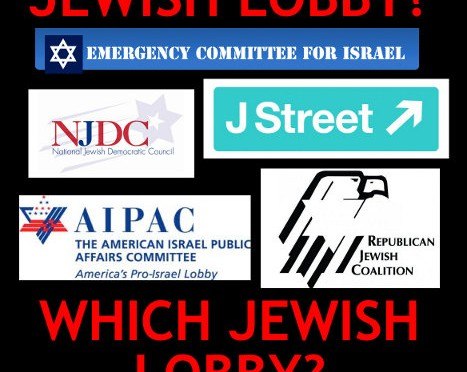
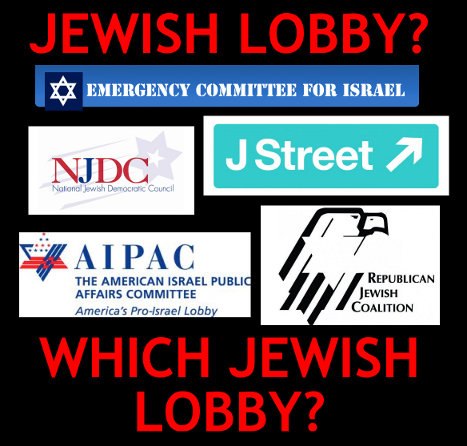
In the first page alone Cohen notes, in addition to the NJDC, the following jewish political organizations which have opposed or supported Hagel: AIPAC, Republican Jewish Coalition, J Street, and the Emergency Committee for Israel (ECI). Together with the many other organizations, media outlets, and individual high-profile jews whose opinions have been widely publicized, as cited both in Cohen’s document and in the posts I’ve made on the subject, a picture emerges of a large, multi-faceted, well-connected, highly-coordinated network dedicated, on the whole, specifically to the pursuit of jewish political interests.

The fact that this political network cleaves along different lines at different times in response to different issues – as it has with Hagel – does not alter its fundamentally jewish composition or the fundamentally jewish interests that it debates and collectively pursues. To excuse themselves, jews often call attention to the noise of the debate itself and away from the goal of the debate. “Two jews, three opinions!”, they say. “Two jews, three opinions about what’s best for the jews!”, is closer to the truth.

The following links and quotes come from following just a portion of Cohen’s lengthy PDF. They demonstrate the long-term and party-line-crossing nature of the jewish debate over Hagel.

88 Senators Condemn Hezbollah. 10 Republicans break ranks on Israel., Philadelphia Jewish Voice PJV#15, Sept 2006:

“When it comes to Israel and the Jewish community, the hypocrisy of Republicans in Congress is just overwhelming. How is it that Republicans in the Senate can claim to be supporters of Israel when almost 20 percent of their caucus — including their top two Members on the Foreign Relations Committee and top Republican on the Armed Services Committee — apparently does not think that Hezbollah should be on the E.U. list of terrorist organizations,” asked NJDC Executive Director Ira Forman. “While Democrats are out there trying to punish Israel’s enemies and ensure that she has a right to defend herself, these ten Republican senators have no problem with the international community treating Hezbollah as a legitimate organization. Shame on them.”

In 2006 it was Democrat jews trying to punish, or at least shame, Republican senators, including Hagel, for not “trying to punish Israel’s enemies”. The shameless underlying presumption is that either Israel and the US interests are identical, or more likely, that Israeli interests matter more.

Cohen writes:

March 12, 2007. National Jewish Democratic Council compiles a list of complaints against Hagel. It subsequently removed the grievances from the NJDC website, but was screen-captured and preserved by ad man and Breitbart.com columnist, Jeff Dunetz, and will serve as the basis for future “opposition research” on Hagel’s positions on Israel and Hezbollah

Jeff Dunetz blogs under the pseudonym Yid with Lid. He republished a copy of the NJDC list on the same day it was issued. The list cites Hagel’s “failures” from a specifically jewish point of view as far back as Oct 2000. This NJDC list is what Cohen dismissively describes in her introduction as “petty grievances”. The jews she cites all take it much more seriously.

Two years later the same list was still at the center of the ongoing jewish debate about Hagel. NJDC Chief Weighs in on Hagel Appointment (Update w/RJC in Response), by Michael Goldfarb, The Weekly Standard, 29 Oct 2009:

Yesterday the Republican Jewish Coalition was taunting its Democratic rival, the National Jewish Democratic Council, over the appointment of former Republican Senator Chuck Hagel to serve a co-chair of the President’s National Intelligence Advisory Board. As the RJC was quick to point out after news of the appointment broke, the NJDC had put out several statements over the years blasting Hagel for his “questionable Israel record.” In particular, Hagel had refused to sign a series of letters that had broad bipartisan support and which focused on a range of issues of great importance to the Jewish community. He had refused to sign a letter in August 2006 asking the EU to declare Hezbollah a terrorist organization. In 2004, Hagel had refused to sign a letter urging President Bush to highlight Iran’s nuclear program at the G-8 summit.

NJDC executive director Ira Forman responded by blasting his counterpart at the RJC, Matt Brooks. Brooks, Forman said, is “not concerned with little issues like shame or hypocrisy.” Forman said that RJC had plenty of opportunities to question Hagel’s record when Hagel was serving in the Senate. “Apparently [the RJC] just recently had a revelation” about Hagel’s foreign policy views. But neither was Forman prepared to denounce Hagel again now that the shoe was on the other foot. “Anybody who’s looking for purity from us is going to be disappointed,” Forman said in the course of declining to criticize the appointment.

Still, Forman isn’t a fan of Hagel. He suggested that NJDC would publicly oppose Hagel’s nomination for a position with more authority. “If [Hagel] was taking a policy role, we’d have real concerns,” Forman said. And Forman indicated that his group would oppose Hagel’s appointment to any position that had influence over U.S.-Israel relations.

While the RJC may not have “even a little credibility to attack” this appointment, as Forman says, the bipartisan show of discomfort with Hagel’s foreign policy views suggests Hagel is not destined for a bigger role in this administration.

An interesting postscript to this story is the fact that Hagel’s appointment was announced at J Street’s gala dinner on Tuesday night just before Hagel delivered the keynote speech at that event. NJDC is an explicitly partisan, Democratic organization, while J Street aspires, or at least claims to aspire, to bipartisan influence.

Most jewish political organizations aspire to bipartisan influence. A characteristic trait of jewish political organizations is the flexibility of their partisanship, which usually results in a “bipartisan show of discomfort” (or comfort) most jews can agree on.

The partisan switcheroo on Hagel is a case in point. Jews from all sides continue to debate the same list of specifically jewish concerns, clearly demonstrating how jewish ethnic interests rise above the ebb and flow of party ideologies and loyalties. For or against Hagel their unchallenged presumption, often explicitly stated, is to ensure the selection of someone who will serve the best interests of the jewish ethnostate.

Dunetz brought the NJDC list of grievances back to light last month and added some fresh vitriol. “The Lid”: Will the NJDC Oppose Terrorism Loving, Israel-Hating Chuck Hagel’s Appointment As Sec of Defense?, 13 Dec 2012:

Senator Hagel often appears before Arab-American groups to air his views regarding the Middle East. Among the gems of wisdom: support for Israel shouldn’t be automatic. .

He has also joined a chorus of people surrounding Barack Obama who use the anti-Semitic meme about the so-called Jewish Lobby.

Says Hagel: “The political reality is that… the Jewish lobby intimidates a lot of people up here.” This audio should be heard to truly gauge his own feelings.

Note his use of the term “Jewish Lobby”. There are many millions of Americans who are not Jewish, who support the American-Israel relationship. Hagel pushes the meme that Jews control American foreign policy (if they did–they would do a better job than this administration).

Note the self-identified Yid with Lid’s use of the term “jewish lobby”. It’s a telling combination of mocking, gloating, contempt and denial.

Dunetz is part of an ethnocentric jewish chorus who expect US government and military leaders to support Israel. Some, like Dunetz, expect that support to be automatic. It’s a given to Dunetz that the US government could do a better job serving jewish interests. It is with this end in mind that he tosses self-righteous insults and insinuations with abandon, freely projecting his own unhinged passions onto Hagel. Thus Hagel becomes “Terrorism Loving, Israel-Hating” boogeyman Hagel. What’s so ineffably jewish about such wild, deluded exaggerations is that rather than costing Dunetz his credibility or livelyhood, he expects that it should cost Hagel his.

The debate over Hagel is dominated by jews. They dominate the debate over most political issues. In this case they’ve just made themselves more vocal and visible than usual. However many Americans there are who aren’t jews, and however they feel about anything, it’s entirely accurate to identify and refer to a “jewish lobby” whose activism represents, at root, pursuit of the best interests of jews.

If Blue people and some others were arguing over what’s best for the Bluish ethnostate, and some Blue people started making a big deal over whether somebody who isn’t Blue referred to it as the “Bluish ethnostate lobby” or the “Blue lobby”, that would rightly be seen as a distinction without a difference. What’s different here is that it’s jews, not Blues, who are involved.

The ridiculous arguments Dunetz and others make in defense of jewish power wouldn’t make sense when applied to anyone else. They make such arguments because they consider jews special and aren’t thinking in terms of anyone else. They aren’t ridiculed because 1) even the jews who oppose Dunetz are ethnocentric enough not to take issue with the presumption that jews are special, and 2) everyone else is more or less ignorant of, allied with, or intimidated by jewish power.

This jewish chimp-out over Hagel’s nomination demonstrates the enormous influence jews have, think they have, or think they should have over US policy-making. It also raises some important questions. Is it really controversial that a US senator or secretary of defense should have the best interests of the US rather than Israel foremost in their mind? Isn’t this only controversial because the political discourse is so chock full of jews willing and able to argue more or less dishonestly in favor of whatever they think is best for jews? Isn’t this a reflection of the jewish domination of the corporate, mainstream media? Is there anybody left in mainstream politics or media who will dare make the simple point that none of this is good for the rest of us? When?

Charles Lindbergh Speaks on a United European Race

Charles Lindbergh Speaks on a United European Race

Charles Lindbergh, 13 Oct 1939:

Our bond with Europe is a bond of race and not of political ideology. It is the European race we must preserve, political progress will follow. Racial strength is vital, politics a luxury. If the White race is ever seriously threatened, it may then be time for us to take our part in its protection, to fight side by side with the English, French and Germans, but not with one against the other for our mutual destruction.

Jews Override Hagel Veto

Well, well. Previous reports of Chuck Hagel’s political death were greatly exaggerated.

A Hagel Education, published on 7 Jan 2013 by WSJ:

President Obama on Monday chose Chuck Hagel to lead the Pentagon, inviting a confirmation brawl over a troubling nominee. The Senate should oblige. The Hagel hearings are an opportunity to have the debate over Mr. Obama’s policies and a growing world disorder that we didn’t have in the election campaign.

The suggestion that the Senate has more of a say about US policy than the jewish lobby is quaint. After nearly a month in which one or more of the terms “jewish lobby”, “Israel lobby”, and “Israel” appeared in nearly every mainstream media op-ed about Hagel, this WSJ report is most conspicuous for not mentioning any at all, even if only to acknowledge what has already transpired. It is indicative of an overall shift in the debate.

But no one questions Mr. Hagel’s patriotism and military service. What matters at the top of the Pentagon, at this moment in history, is how he would deal with today’s growing security threats amid Mr. Obama’s desire to withdraw the U.S. from its traditional role of world leadership.

Only now are questions beside what’s best for Israel being brought to the fore. The debate so far has been primarily between jews, their main question being whether Hagel will be good for their ethnostate. That question is still not entirely settled. What has been settled is that this is the primary question. It’s not about what should matter most to the US Department of Defense, which many Americans still like to imagine has something to do with the defense of the United States. Likewise, it’s not about whether the US should “lead the world”, which is just a sick and dishonest way of describing the killing and dying US soldiers have been and will continue doing to keep the world safe for jews.

WSJ’s Brett Stephens is the journalist-warrior jew who set the jew-centric tone of the subsequent debate with his 17 Dec 2012 op-ed, Chuck Hagel’s Jewish Problem. Now he’s making the case that the question is Chuck Hagel’s Courage, but still can’t help give away the game:

But give Mr. Hagel this: When it comes to expressing himself about Israel, its enemies, and the influence of the so-called Jewish lobby, he has been nothing if not consistent and outspoken. Maybe that’s political courage. Or maybe it’s a mental twitch, the kind you can’t quite help. The confirmation process should be illuminating.

It has already been illuminating. It will be even moreso if the confirmation process makes more jews twitch like Stephens.

Not every jew has decided to shift gears yet. Some are still twitching in response to Stephens initial hit piece. In The tarring of Chuck Hagel published by The Washington Post yesterday, Richard Cohen writes:

I thought the day had long passed when a skeptical attitude toward this or that Israeli policy would trigger charges of anti-Semitism. The accusation is so powerful — so freighted with images of the Holocaust — that it tends to silence all but the bravest or the most foolish. Israeli policy of late has been denounced by some steadfast champions of the Jewish state — the New York Times’ Thomas Friedman or the New Republic’s Leon Wieseltier, for example — so being caustically critical is hardly evidence of anti-Semitism. Rather, it can be a sign of good judgment, not to mention a caring regard for the aspirations of Zionism.

The article that implied Hagel was a touch anti-Semitic was headlined “Chuck Hagel’s Jewish Problem” and suggested that Hagel’s statement that “the Jewish lobby intimidates a lot of people up here” in Congress had “the odor” of prejudice. A PC sort of guy might have put things more delicately: If there is an odor here, however, it is not the rancid stench of anti-Semitism but instead of character assassination.

This is typical of what passes for “caustic criticism” in jewish minds – jews gnashing their teeth at other jews about who is the better jew. Two jews might appear to be arguing vociferously, but note how their language never gets more venomous than when they talk about “anti-semitism”, their common cause eventually bubbling to the top, overriding all others.

The sad reality that contemporary political discourse is so dominated by jews and their concerns didn’t just happen. It is the product of a long slogging effort by jews. A process by which anyone jews perceive as an enemy is pathologized and demonized, and thereby cowed or marginalized, if not utterly silenced. When a jew cries, “X has a jewish problem”, it’s a call for jews to pounce on X.

Chuck Hagel is the most recent example of how this “jewish lobby” process works. If he makes the right combination of sufficiently subservient gestures, acknowledging and accepting jewish domination without calling further negative attention to it, then he might get the job. If not, he won’t.

Now with the ground well prepared it’s safe to get back to the old Red-vs-Blue again, to act as if jews don’t have power, and move on. For example, here’s David Brooks in Why Hagel Was Picked, published on 7 Jan 2013 by NYTimes.com:

Chuck Hagel has been nominated to supervise the beginning of this generation-long process of defense cutbacks. If a Democratic president is going to slash defense, he probably wants a Republican at the Pentagon to give him political cover, and he probably wants a decorated war hero to boot.

All the charges about Hagel’s views on Israel or Iran are secondary. The real question is, how will he begin this long cutting process? How will he balance modernizing the military and paying current personnel? How will he recalibrate American defense strategy with, say, 455,000 fewer service members?

How, in short, will Hagel supervise the beginning of America’s military decline? If members of Congress don’t want America to decline militarily, well, they have no one to blame but the voters and themselves.

One reason jews won’t openly acknowledge their political power is because they realize it’s fundamentally dishonest and illegitimate – made possible by the vast majority of people not recognizing it for what it is. This is the threat Stephens was sniffing out in the loose talk from an uppity goy senator about the “jewish lobby”. What’s weighing on Brooks’ mind is related. If and when anything goes wrong jews can be counted on to blame anyone but jews. Brooks is looking to the future, anticipating this eventuality.

Politics + Technology = Nonsense at the Speed of Light