Category Archives: Blog

The Country Club Thing

As an addendum to Junk Bonds and Corporate Raiding as Ethnic Warfare I quoted Rob Eshman’s use of the jewish narrative to excuse jewish behavior:

It’s not complicated, really. Poor little Jordan wanted to show those WASPs whose country clubs he couldn’t join that he was smarter, richer, better. What he failed to understand is that just about every Jew, every minority, shares the same impulses. But only a select few decide the only way to help themselves is to hurt others.

Sailer’s response to Eshman was:

I really am going to have to write about the country club thing one of these days. I’ve found an Anti-Defamation League report from a half century ago on country clubs that’s pretty interesting.

I can’t wait. Of course, the country club thing is only one of several common tropes in jewish tales of woe specific to America. Other, similar tropes focus on the relatively brief period during which there were informal limits on the number of jews admitted to some universities (discussed here) and informal restrictions on where they could work or reside (ala Gentleman’s Agreement, discussed here and here). The irony is that the jews are able to tell their one-sided woe-is-me version of this history only because the “WASP” defense of themselves and their institutions was not strong enough.

The explanation for jewish hostility is less complicated than either Eshman or Sailer will admit. It’s racial animus. The jews are parasites, hyper-aware of their otherness, the distinction between themselves and their host, in both body and mind. Conflicts of interest between them and their hosts are unavoidable. Jewish excuse-making and guilt-tripping is one mechanism for managing it. They understand the animus. They wish and indeed need to monopolize the explanation of it, to spin it in their favor.

The jewish narrative, stripped to its essence, is: YOU aren’t US, YOU should feel bad about that and try harder to please US. The double-think takes root in hosts with universalist, or at least pluralist tendencies. It expresses itself as a form of willful confusion about who US is: B-but, WE are all US, let US try harder to please US!

To see through this, you must be willing to think about what US means, and especially in biological terms, as the jews do. At least a few fans of Sailer’s “race realism” and “human biodiversity” are on the cusp of such understanding. As one commenter wonders:

What is this Jewish problem or hangup about country clubs? Freedom of association is a natural and okay thing. If WASPS didn’t want to have them, that’s their right. It is a PRIVATE club, not PUBLIC property like a library. Why couldn’t Jews just have their own clubs? Did it REALLY bug Jews that much that WASPS didn’t prefer them over their own kind? Why would they? Do Jews need validation so badly?

Why indeed. It is only a mystery as long as you pretend that jews are part of your US, or even wish to coexist with your US. They don’t. You are there to be infiltrated, manipulated, exploited. For their own good. This is why the suicide meme is so insidious. It is premised on, relies on, and even adds to the muddled thinking about who US is, abetting the “suicide” it purports to deplore.

While waiting on Sailer to share his little ADL tidbit, I’d like to recommend something Revilo Oliver wrote. It indicates not just how well established, how essential this “country club thing” is in the jewish psyche, but also how fruitless it is to go searching through history for ways to excuse jewish parasitism.

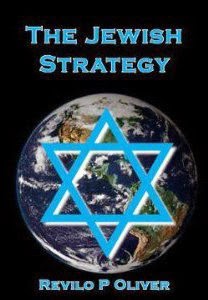
The following text comes from Oliver’s The Jewish Strategy:

III. THE JEWISH STRATEGY AT WORK: ANCIENT ALEXANDRIA

In the early years of our era, the Jews were then (as now) busy selling religion and revolution to the natives, and that is undoubtedly what the Emperor Claudius meant in 41 A.D. when, in his letter of warning to the Jews in Egypt (preserved in a papyrus now in the British Museum, R Lond. 1912), he described them as “the fomenters of a universal plague.”

Claudius’ phrase is the best description of the biologically innate nature of Jews that I have seen. I hope this does not startle you; if it does, I recommend a little objective observation of Jews engaged in collective action.

The publication of these papyri in the British Museum stopped with Volume V, just short of the group of papyri, beginning with #1912, that deal with Jews and Christians in Egypt. These, however, were edited in a separate volume by H. Idris Bell, London, 1924, which can be found under his name in any good library. Why the official series stopped where it did (and has never been continued), I do not know. One suspects there was a Jew in the woodpile.

P. Lond. 1912 is a long papyrus fragment excellently preserved. It is a private copy of an edict by Claudius that was posted in public places in Alexandria in 41 A.D. and is complete. It is in Greek, not Latin, because in Egypt every literate person (Greeks, Jews, Egyptians, and the comparatively few Romans who were there as governors and military commanders) knew Greek, whereas only the Roman officials knew Latin at all. Bell believes that our Greek text was translated from Claudius’s Latin, but I am certain that the text is what Claudius himself dictated to a secretary in Greek. Like every educated Roman of his day, Claudius spoke and wrote Greek fluently, and furthermore he was something of a scholar and wrote his two major historical works (now lost) in Greek. This Greek text contains stylistic peculiarities that are characteristic of Claudius’s mentality, but would probably have been smoothed away by a translator.

Claudius, who was born in 10 B.C., was the son of the male child with whom Livia was pregnant at the time that Augustus married her. If that child was legitimate, it was the son of Livia’s first husband and the younger brother of the Emperor Tiberius. If the child was illegitimate, as many suspected, Augustus was probably the father, but never acknowledged the paternity. Claudius’s mother was the daughter of Mark Antony. Claudius in infancy suffered from poliomyelitis or a similar disease that left him with a partly paralysed foot, some impediment in his speech, and muscles of the face and neck subject to spastic contractions. Regarded as unfit for public life, he devoted himself to historical and antiquarian studies, becoming both erudite and pedantic. He was quite intelligent, but timorous, excitable, and gullible, especially toward persons who showed him some attention and professed friendship during the first fifty-one years of his life, when he was regarded as an awkward and ridiculous political nullity, the butt of his nephew Caligula’s wit. Among those who thus acquired his gratitude and confidence were a number of clever Jews of great wealth and influence in Rome. Among these was Marcus Julius Agrippa (note the purely Roman name; a grandson of the Herod who appears in many versions of the Christ story), who, when the barbarian mercenaries rioted after the assassination of Caligula and, while plundering the palace, found old Claudius hiding in a closet and dragged him out to proclaim him emperor, by subtle and crafty machinations and bribery managed to get Claudius installed and recognized as emperor by the Senate. Claudius rewarded him generously, and was always under the influence of the prominent Jews in Rome. That is what makes his pronouncement so significant.

Alexandria was, of course, founded by Alexander the Great as a Greek city in conquered Egypt, and it became under his Greek successors, the Ptolemies, the capital of that country. Its position as the only real harbour in Egypt added to its great prosperity, and naturally Jews came streaming in from their colonies all over the civilized world. Alexandria became the New York of the ancient world, i.e., the largest Jewish city. The Jews took over two of the five quarters of the city for their ghettoes, from which they unofficially but effectively excluded white people, but naturally insisted on pushing their way into all the other quarters of the city and making themselves obnoxious in their normal ways. Jews always betray the countries in which they are feeding on the natives, so naturally, when Augustus attacked Egypt, the Jews naturally betrayed the Greeks, who remained loyal to Cleopatra, the last of the Ptolemies. Augustus punished the Greeks for their loyalty by depriving them of their local self-government, and rewarded the Jews for their treason with many special privileges, including the right to have a kind of Jewish government of their own.

The Jews, now riding high, naturally pushed the Greeks around more than ever, thrusting themselves into the gymnasia and other Greek institutions that were traditionally for Greeks only and inciting riots whenever they were so “persecuted” that the Greeks did not recognize them as a vastly superior race. The result was an endless series of civil disturbances that the Romans were powerless to prevent because no government dared to revoke Augustus’s grant of special privileges to the Jews. In the second year after Claudius became emperor, there was another one of the perennial riots in Alexandria that became virtual civil wars in the city, which was the most populous in the ancient world.

The Greeks of Alexandria despatched an embassy of their leading citizens to Claudius to request restoration of their local government and explain the cause of the riots, and the Jews, of course, sent an embassy of their own to snivel and whine about being “persecuted” by the wicked goyim.

The edict of Claudius of which the papyrus is a copy is addressed to the Greeks of Alexandria and announces his decision concerning the requests made by their envoys.

Omitted here are the contents of the document, both in the original Greek and Oliver’s translation.

The translation could be polished a bit, but it will show the meaning. The sentence in which we are particularly interested, delineated in detail, reads:

But if (they do) not, I shall in every way wreck vengeance upon them inasmuch as (=on the grounds that) they are persons who foment (=incite, propagate) a universal (=ubiquitous, found everywhere) disease (=pestilence, plague) of the oecumene (i.e., the settled and inhabited world, as distinct from jungles, steppes, and deserts).

You will have noticed that Jews were behaving normally in Alexandria, not only whining about being “persecuted” because of their Love of God while pushing their way into every place where the despised goyim hope to have a little privacy from them, but even illegally importing fellow parasites to prey on the white cattle, just as the Jews are constantly importing thousands of their congeners into the United States, not only across the border from Canada, but by ships that land thousands of the dear creatures at Red Hook on Long Island, whence they are carried by limousine to the New Jerusalem commonly called New York City, in open defiance of the immigration officers, who know about it but dare not intervene.

The country club thing is a parasitic thing. It is a pattern of behavior in jews which can be traced back as far back into recorded history as you care to go.

Junk Bonds and Corporate Raiding as Ethnic Warfare

In PBS: The “Greed Is Good” 1980s as a war on anti-Semitism Steve Sailer waxes sarcastic over the narrative recounted in The Lucky Sperm Club: Jews, M&A and the Unlocking of Corporate America – “the inside story of the development of the mergers and acquisitions movement in the 1980s — a phenomenon that has ruled global commerce ever since”.

Sailer writes:

Back in the 1980s when I believed everything I read on the Wall Street Journal op-ed page, the junk bond mergers & acquisition boom was often justified as a war on anti-Semitism in American business life. Eventually, after Ivan Boesky and Mike Milken went to jail and junk bonds contributed to the early 1990s recession, you stopped hearing that interpretation quite so much, but it’s still out there. Certainly, nobody is much interested in debunking it.

From PBS.org, here’s a preview of a new book that revives the argument that the 1980s leveraged buyout bubble was payback for discrimination against Jews. It’s by John Weir Close and is called A Giant Cow-Tipping by Savages: The Boom, Bust, and Boom Culture of M&A

Close, the author, provides the jewish version of how the mergers and acquisitions culture started:

M&A was driven by two Jews, Marty Lipton and Joe Flom, who had simultaneous epiphanies about how to take advantage of new government regulation

America was still an agglomeration of ghettos: Italians knew Italians, Jews knew Jews, Poles knew Poles, Irish knew Irish, WASPs barely knew any of them existed and the Cabots spoke only to God.

“When I came to New York in the ’70s, the WASP aristocracy still reigned,” the Lucky Sperm Club’s Shapiro recalls. “You didn’t see an Asian face above Canal Street. You didn’t see a black face in a law firm unless it was the mailroom. You certainly didn’t see an Hispanic face. Swarthy Italians and Jews? They were not people you dealt with.”

As recently as the 1970s, Jews and all others not of the white Anglo-Saxon Protestant ascendancy were still excluded from any position of real power at the bar, on the bench, at banks and in boardrooms.

Yet again, as happened so often in their history, the Jews somehow found their own methods to carry them past such barriers, and once those blockades were destroyed, other demographics followed.

But it was primarily Jews who first became expert in taking over companies against the will of their existing executives. The white-shoe law firms and elite investment banks found this simultaneously distasteful and tantalizing in the same way medieval merchants viewed the lending of money at interest. Both groups were discouraged from joining in one of the most profitable enterprises of their day: the old merchants by, among other things, an ecclesiastical ban on the practice of usury; the new lawyers, by the establishment’s social codes of behavior. Again, the Jews found themselves in control of an industry that then perpetuated the stereotype: the omnipotent, venal Machiavellian, hands sullied by the unsavory. But the business of takeovers paid the rent. And then some.

This is the jewish narrative. Jews oppressed by Whites. Who forced them into finance! Then the jews prevailed and turned their narrative into a template for other “minorities” – neutralize the White oppressors so everyone can pay their rent (to the jews, of course).

Sailer notes that it was Ivan Boesky and Michael Milken, two more jews, who invented the “junk bond” fraud that helped finance their takeovers of corporate ownership. I wonder who the jews were who actually started it all by lobbying for and writing the government “regulations” all these other jews took advantage of.

At any rate, it was only the prosecution of Boesky and Milken in the 1990s which broke through into mainstream consciousness. The jew-dominated media was busy spinning the whole affair not as an ethnic war, but as an internecine corporate struggle, a hopelessly complex story best reduced to a parable about the excesses of greed. One clear indication that it was in fact part of an ethnic war came when Milken retained professional hyper-jew Alan Dershowitz for his legal defense. Throwing off the cloak and doubling down on the jewish privilege and aggression which had characterized the raiding all along, Dershowitz immediately went on the offensive. Aiming not so much at the courtroom as at the court of public opinion, Dershowitz leveraged the jew-dominated media to finger “anti-semitism” as the source of all the trouble.

Any perception that Dershowitz lost his battles – whether to keep Milken out of prison or to transfer blame for jewish malfeasance to “anti-semitism” – is wrong. Milken was sentenced to just 10 years in prison for the incalculable damage he had wrought. He served only 22 months. Purportedly disgraced, Milken remains rich and famous. He continues to advertise himself as a financier. At the time, the culprits were described in disapproving but deracinated terms, like “Den of Thieves“, and jews like Dershowitz howled that this was an example of jews being wronged. Today jewish power is even greater and more overt, so now the story is that jews were waging war because they had been wronged.

In fact, by the 1980s the jews had been waging an unrequited war for decades. Sailer points out that the “battle for Revlon was written about endlessly in the 1980s as a struggle between the dying WASP past and the new money meritocracy” even though the raider (Ron Perelman) and raidee (Charles Revson) were both jews.

This is no surprise to students of the jew. Henry Ford’s The International Jew well documented the distasteful qualities and startling extent of jewish power as of the early 1920s, before their hegemony was complete. The jews used the same playbook in the 1920s and 1980s as they do today. First they pillory the goyim for imagining jews are pillaging them. Then they pillory the goyim for making the jews pillage them. Pillory and pillage, pillage and pillory. Even when it’s nothing more than jews fighting jews over who gets to pillage the goyim, their age-old canard is that they’re fighting the discrimination and intolerance of an omnipotent “anti-semitic” conspiracy.

Sailer concludes with a lame plea of ignorance:

I don’t really know why the Revlon takeover of 1985 was seen in the media as such a milestone of Jews overcoming WASP discrimination. It just was.

In summary, the Revlon takeover as a plucky triumph over anti-Semitism is a good example of how malleable accounts of one’s people’s past oppression can become for the purpose of justifying dubious dealings in the present.

The corporate raiding was but a mopping up operation, a battle that could take place only because other political and social battles had been fought and won in prior decades. It was the jews’ overwhelming financial and media power, and partial control over business, which made mopping up on the corporate front possible. They prevailed mainly by default. Their whining about “WASPs” notwithstanding, in the US the jews have never faced any comparable opponent as aware, cohesive or ruthless, who clearly saw themselves at war and with whom.

The dominance of the jewish narrative today is an indication of jewish dominance not only over media, finanace and business, but over the very thoughts of non-jews. Yet the jewish narrative doesn’t spring from jewish dominance. Just the opposite. It is only an uncompromising belief in their righteousness, in the moral legitimacy of their cause, through which any people have any prospect of prevailing in the long term.

Armed with such beliefs the jews have, time and again, cultivated the opposite in their hosts – unawareness and disorganization – and thus prevailed. The very first step to combat jewish parasitism is recognize it as such. Jewish lies are not harmless, but are more properly regarded as the acts of a hostile adversary, an essential element of their stealthy struggle to attain and maintain dominance.

Answering the American Studies Association

ASA Members Vote To Endorse Academic Boycott of Israel, American Studies Association, 16 December 2013.

This statement, and especially the Endorsements attached below it, provide a good example of the jewish narrative blowing back on jews. The swift and explosive response from jews outside the ASA illustrates, yet again, that jews aren’t “white” in any meaningful political sense and their ethnostate isn’t subject to the usual standards by which “white” states are judged.

The divisively unanswerable questions of what it means to be ‘pro-Israel’, Max Fisher, 17 December 2013:

On Monday night, the heads of two major pro-Israel organizations and the editors of two publications associated with support for Israel gathered for a relatively routine event: a panel discussion at the 92nd Street Y, in New York, on “what it means to be pro-Israel.” A few hours earlier, members of the American Studies Association, an association of some 5,000 American studies college professors, had voted 2 to 1 to boycott Israeli universities. Shortly after the panel moderator and editor-in-chief of the Jewish Daily Forward, Jane Eisner, raised the issue, the panel broke up in a relatively spectacular walk-off.

In debates about Israel, disagreements that might seem minor on the surface – the “tyranny of small differences,” as one Israel-watcher put it to me – are often something much graver. If you know what to watch for, you can observe somber, serious people like these four panelists talk around underlying issues so sensitive they are rarely addressed or even acknowledged. Issues that are almost always below the surface, but too deep to come out except in moments of the most heated candor, often surprising even the people naming them.

These are questions so difficult, and that cut so close to the core of what it means to be an American supporter of Israel, that even scholars or professionals with decades invested in Israeli issues will hesitate to touch them. But you can hear them, if only hinted at, in arguments like Monday evening’s. Is it good or bad for Israel that more American Jews are questioning Israeli policies? At what point, if ever, should one’s support for Israel be limited by the needs of non-Israelis touched by the conflict? Is a Zionist’s responsibility to guard Israel’s survival, to guard Israel’s interests or merely to concern oneself dispassionately with the issues facing the country?

Some of these questions are simply unanswerable. Some are trick questions. Some are highly taboo; the question about competing interests can easily echo accusations, made by the most anti-Semitic movements in history, that Jews harbor “dual loyalties” and cannot be trusted. But many are just extremely difficult, touching on issues of identity, politics and personal responsibility. They cause conflict both because no one can agree on the answers, or often even the terms of the questions themselves, and because everyone ends up judging one another according to their own personal and widely varying standards.

What’s best for the jews? This is the central question around which jewish arguments about politics, identity and everything else revolve. To a jew this question is “unanswerable” only in the sense that they never stop asking it. By exaggerating their disagreements on answers jews downplay their agreement on the question.

In asking this question jews show no fear of tricks or taboos. What they fear are the wholly different questions which inevitably form in the minds of non-jews. Who are these jews? What are they doing? Why should anyone tolerate the conflict and harm they cause? These questions, and the “anti-semitic movements” which coallesce in response, have historically been instigated by the words and deeds of the jews themselves, by jewish parasitism, by jews infiltrating, manipulating and exploiting their host society.

In the case at hand the jews are more and more openly directing the resources of the United States toward Israel. They anticipate a hostile reaction because one is justified. The existence of Israel, their fruiting body, only highlights jewish parasitism. It inspires even nominally “liberal” jews to fret most illiberally over their particularist identity and interests, even when those interests are being served so clearly at the expense of others. It inspires even nominally “conservative” jews, like John Podhoretz, to tantrum at domestic tribemates on behalf of foreign tribemates.

How do they answer the ASA? By orchestrating political and academic boycotts, of course. Jews in government are moving to cut off government funds to ASA supporters and jews in universities are directing them to cut off support for ASA. No “dual loyalty” here. These jews in positions of power demonstrate that they see themselves as jews first, and see the institutions over which they have some measure of power as vehicles for advancing the interests of jews. One institution has vexed them, so they are using their influence over others to exact punishment.

Jews know they don’t face any substantial, organized opposition. The only real difficulty they have is in communicating about their conspiracy. Their problem is more cryptological than ideological. How to discuss and advance jewish interests while suppressing any “anti-semitic movement”? Their answer, as always, is to do both, because they are in essence the same.

The Murder of Mary Phagan

Part 1 in a series of podcasts on this subject was first broadcast two weeks ago. Part 3 broadcasts tonight. The series will likely continue through January.

In the wake of Mary Phagan’s murder on 26th of April 1913 came “the trial of the century”, culminating in the lynching of Leo Frank in 1915. Overall I’m finding it a fascinating subject to examine, quite informative about race relations between Whites, jews and blacks, then and now.

When Circular Firing Squads Attack

Responding to Carolyn Yeager’s most recent program, Movement Madness, Rodney Martin made a SPECIAL BROADCAST via his by American Nationalist Network.

The complaints Yeager and Martin have about each other don’t interest me, but I would like to answer Martin’s references to me.

@17:50:

My wife is not an injun, sorry to disappoint you Carolyn. I would ask you however to have you to post a picture of your partner over at the White network, Tanstaafl, and if you like I can reveal his name and his jewess wife, and let’s just see how much Ashkenazim blood runs over there. We wanna get into your tagline “Whites talking about Whites about White interests”, let’s really get into this. This all could have been resolved if you had just sent me an email…

I don’t see what I or my wife have to do with this, and neither did Martin until he decided he didn’t like what Carolyn was saying. He lashes out at me out of spite, not based on any principle he wouldn’t have continued to overlook if he had gotten the right email.

If I wanted my name or face revealed I would reveal them myself. What I have disclosed about myself personally, including my wife’s background, I have done in order not to speak under false pretenses.

@20:30:

Talking about hypocrisy, you don’t attack people using a fake name, you don’t have a person running your network and talking about White issues who’s married to a jewess and using a fake name, who’s terrified about being contacted by anyone in the movement…

My fake name and wife are really beside the point. The point is that I help keep Carolyn online, and since Martin has decided he doesn’t like what she’s saying, I have to go.

I’m a technician and analyst. I have no ambition to be a public spokesman for Whites, much less a leader. Even though I don’t make myself easy to contact, I have met several people, including one or more who have probably met Martin.

@30:45:

Can you imagine if I were to open my email right now and read every email that people sent me regarding Carolyn Yeager? I can tell you people would be shocked. If I were to read the emails telling me about her co-host Tan? I’m not gonna do that today, I won’t do that unless I have to. He’s disclosed that he’s married to a jewess. One of the criticisms we’ve had/heard was that during the Thanksgiving week, which was also Hannukah, they didn’t have any programs. Were they taking Hannukah off, because of the face-to-face relationship there? I don’t know.

If Martin thinks he knows something other Whites should know, he should disclose it. Holding it out as a threat, to be disclosed only “if he has to”, signals vendetta, not principle.

I took two weeks off after making podcasts for 75 weeks straight. During most of that break I was on the road with my family. We’re not jews. We don’t celebrate jewish holidays. My wife’s father was a jew. He died when she was a little girl. If you want to condemn me, let it be for what I’ve done, not some trumped up bullshit out of your imagination.