The Danube Valley Cultures of Old Europe

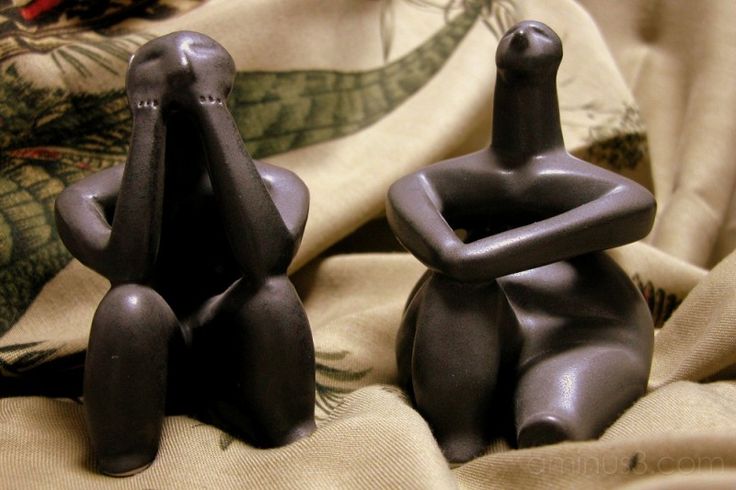
the_thinker_and_the_sitting_woman

The Lost World of Old Europe: The Danube Valley, 5000 3500 BC (links added):

We have embraced a world that I for one didn’t know existed when I was educated many years ago. Nobody ever talked about the fact that there was a great civilization in Europe well before the pyramids, before the ziggurats, before the Mycenaeans, before Periclean Athens, before all of that there was an extraordinary civilization in the Danube river basin.

It also pre-dates the Aryan invasions of Europe.

The evidence of Old Europe is not only in writing, but in other artifacts, and in our DNA. Modern Europeans are essentially an amalgam of haplogroup I Old Europeans and the haplogroup R1 Aryans who later conquered them. The term Old Europe was coined by Marija Gimbutas. I’ve previously discussed the Aryans, Marija Gimbutas and the Old Europeans in Who’s White? – Part 3.

Danube Script from Old Europe 5000 – 3500 BC:

Harald Haarmann is the world’s leading expert on ancient scripts and languages. According to him, these are the oldest writings in the world invented by and ancient civilization that existed in the Balkans thousands of years ago.

This implies that the first high culture in the world originated in the Balkans. So Mesopotamia would no longer be called the Cradle of Civilization. The ancient culture in the Balkans is thousands of years older. The tablets of Tărtăria were found in Romania and they are dated 5500 BC.

Old Europe – The Danube River Valley Civilization 5000 B.C. – 3000 B.C links many images of artifacts from various sources on the web.

Danube Valley cultures:

Danube Valley civilization or the term Old Europe is the name for several advanced cultures in southeastern Europe and surrounding areas who were connected to the Danube River valley. It was a cycle of cultures beginning somewhere between 7,000 – 6,200 BC,[1] its time of peak were 5,500 – 3,500 BC, from 3,500 – 3,000 BC the civilization fell into decline. The main reason for this were perhaps the arrival of the Indo European speaking people from Eastern Europe.

“Indo European speaking people” is a contemporary semitically correct euphemism for Aryan.

The Danube valley civilization is largely a forgotten, rather than lost civilisation.[57] The upheavals that followed the Indo-European infiltrations into Europe from 4300 BC to 2900 BC transformed differents regions at different times. A few areas were left relatively unaffected.

Modern observers have projected quite different visions on the remains of Old Europe. But this much is clear—far earlier than before recognized, southeastern Europe achieved a level of technological skill, artistic creativity, and social sophistication that defies our standard categories and is just beginning to be understood in a systematic way.

Yockey on Culture and Race – Part 2

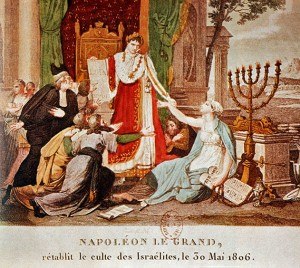
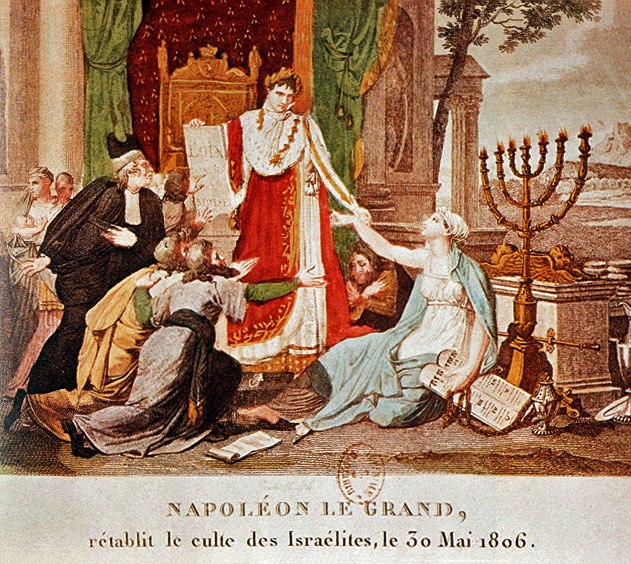
Napoleon_stellt_den_israelitischen_Kult_wieder_her,_30._Mai_1806

We make here a brief digression to provide some context for Francis Parker Yockey’s quotes from Napoleon.

First, we’ll consider an explication provided by Eric Voegelin. Who is Voegelin? Eric Voegelin and Ancient Israel:

Eric Voegelin (1901-1985) has been described as a political philosopher and a philosopher of history. His magnum opus Order and History is regarded by partisans in terms of scientific scholarship combined with theological insight.

He watched the Austrian and German republics fall in the 1930s when the Nazis gained power. Voegelin loathed the irrationality and racism of Nazism, and eventually lost his admiration for Nietzsche, of whom he was very critical in some of his later writings. However, it was not merely the “will to power” that aroused his disdain. Although a Lutheran in his upbringing, Voegelin came to distrust the ecclesiastical establishment. During the 1930s, all except one of the Christian clergy he knew were Nazis. (3)

He exposed himself to danger in being unwilling to align himself with Hitler’s cause. In 1938, he was dismissed from his professorial post at the university of Vienna, and narrowly escaped from the Gestapo. Fleeing from the Nazi environment, Voegelin moved with his wife to America, where he lived for the rest of his life, becoming an American citizen.

Any opinion-shaper Lawrence Auster approved of must be regarded with suspicion:

Auster revered Eric Voegelin, another epic-level falsifier of reality. Voegelin was the source of most of Auster’s stupid ideas about “gnosticism”. Voegelin claimed that gnosticism was responsible for Marxism.

Voegelin’s discussion of Napoleon is part of a broader examination of Auguste Comte:

Isidore Auguste Marie François Xavier Comte (19 January 1798 – 5 September 1857), better known as Auguste Comte (French: [oɡyst kɔ̃t]), was a French philosopher. He was a founder of the discipline of sociology and of the doctrine of positivism. He is sometimes regarded as the first philosopher of science in the modern sense of the term.

Comte’s social theories culminated in the “Religion of Humanity“, which influenced the development of religious humanist and secular humanist organizations in the 19th century. Comte likewise coined the word altruisme (altruism).

Thomas Huxley described Comte’s religion as “Catholicism minus Christianity”.

The following excerpt is taken from Voegelin’s History of Political Ideas: Crisis and the Apocalypse of Man, the section titled The Apocalypse of Man: Comte, p. 204:

Napoleon – Russia and the Occidental Republic

More specifically, the political program of [Auguste] Comte is related to the ideas of Napoleon. This is a question of which Comte is strictly reticent; Napoleon appears in his work only in order to be condemned as the “génie rétrograde” [retrograde engineering]. Nevertheless, the relation exists. In particular Comte’s conception of the Occident is hardly conceivable before the consolidation of the Occidental idea through Napoleon’s struggle with the new Orient, that is, with Russia. Let us pass in review a few utterances of Napoleon: “There are only two nations in the world. The one lives in the Orient, the other occupies the Occident. The English, French, Germans, Italians, and so on, are governed by the same civil law, the same mores, the same habits, and almost the same religion. They are all members of one family, and the men who want to start war among them, want a civil war.” 43 The means for abolishing this state of Occidental civil war would be the political unification of the West. “There will be no peace in Europe except under a sole chief, under an emperor who has kings as his officers and distributes kingdoms to his lieutenants.” 44 The political should be followed by the institutional and civilizational unification. “All the united countries must be like France; and if you unite them to the Pillars of Hercules [at the Straight of Gibraltar, southern tip of Spain] and to Kamchatka [far-eastern Russia, a pennisula jutting into the Pacific ocean], the laws of France must extend everywhere.” 45 And in retrospect: “Why did my Code Napoléon not serve as the basis for a Code européen, and why my Université impériale not as the model for a Université européenne? In this manner we would have formed in Europe one and the same family. Everybody, when traveling, would have found himself at home.” 46 This Occident is a unit not only because of its internal history and coherence; it is forced toward a still more intense unification because of its defensive position against Russia.

Napoleon elaborates this problem on the occasion of the Russian plans with regard to Turkey. The ideas of the tsar revolved around the conquest of Turkey. “We discussed several times the possibility and eventuality of its partition, and the effect on Europe. At first sight the proposition attracted me. I considered that the partition would extend the progress of civilization. However, when I considered the consequences more coolly, when I saw the immense power that Russia would gain, and the great number of Greeks in the provinces now subject to the sultan who then would join a power which is already colossal, I refused roundly to have a part in it.” The principal difficulty was Russia’s design on Constantinople, for “Constantinople, c’est l’Empire du monde.” [is the Empire of the world] It was obvious that France, “even if she possessed Egypt, Syria, and India, would be nothing in comparison with what these new possessions would make of Russia. The barbarians of the north were already much too powerful; after this partition they could overrun all Europe. I believe this still.” 47 In another mood he sees this danger present even now. “If Russia finds an emperor who is courageous, impetuous, capable, in brief: a tsar who has a beard on his chin, then Europe is his. He can begin his operations on the German soil itself, at a hundred leagues from Berlin and Vienna, whose sovereigns are the only obstacles. He enforces the alliance of the one, and with his help he will defeat the other. From this moment he is in the heart of Germany.” At this junction, Napoleon puts himself in the place of the conqueror, and continues: “Certainly, if I were in this situation, I would arrive at Calais according to a timetable in moderate marches; and there I would find myself master and arbiter of Europe.” Then, in the conversation, the dream of the conquest of the Occident separates from the Russian problem. He is now himself the conqueror who is master and arbiter of Europe. And he addresses his interlocutor: “Perhaps, my friend, you are tempted to ask me, like the minister of Pyrrhus asked his master: And what is all this good for? I answer you: For founding a new society and for the prevention of great disasters. Europe waits for this relieving deed and solicits it: the old system is finished, and the new one is not yet established, and it will not be established without long and violent convulsions.” 48 Let us, finally, recall that Napoleon also dreamed of making Paris the seat of the spritual power of the Occident as of its temporal power. With the pope in Paris, the city would have become “the capital of the Christian world, and I would have directed both the religious world and the political. . . . I would have had my religious sessions like my legislative sessions; my councils would have been the representation of Christianity; the popes would have been only its presidents; I would have opened and closed these assemblies, approved and published their decisions, as it had been done by Constantine and Charlemagne.” 49

43. This and the following quotations are taken from the collection Napoléon, Vues politiques, introduction by Adrien Dansette (Rio de Janeiro: Amérie-Edit, n.d.). The original edition is Paris, 1839. The passage quoted is from September 1802, p. 340.

44. “A Miot de Mélito,” 1803, in ibid.

45. “Au conseil d’état,” July 1805, in ibid., 341.

46. “A las cases, Sainte-Hélène,” in ibid.

47. “A O’Meara, Sainte-Hélène,” in ibid., 339 f.

48. “A las cases, Sainte-Hélène,” in ibid., 337 f.

49. “A las cases, Sainte-Hélène,” in ibid., 181 f.

Roman Bernard’s Nation-States, the European Union and the Occident (1/3) asks, “how we get from stato-national feeling to Pan-Occidental awareness”:

Western European nations originate from the Carolingian Empire, which was shared out in 843 A.D. between the three grandsons of Charlemagne.

From the dislocation of the Western Empire, as it was then named, emerged thus three states. These were Francia Occidentalis (which would become France) and Francia Orientalis (later the Holy Roman Empire, which was Germanic). Lothair kept an awkwardly-shaped strip in the middle, including all the regions European powers would seek to conquer up to WW2: what would later become the Low Countries, Rhineland, Alsace, Switzerland, Northern Italy.

Francia Orientalis, AKA East Francia, comprised most of contemporary Germany, Austria and Croatia.

A comment on the previous installment from Marcus linked Napoleon I: Visionary Racial Nationalist:

In the bolded quote, Napoleon makes the right case for ethnonationalism, in contrast to many White Nationalists of today who look to moral or scientific justifications for their ideology.

“Years later, questioned by his friend Truguet about what he had done in Saint-Domingue, an enraged Bonaparte declared that, had he been in Martinique during the Revolution, he would have supported the English rather than accept an end to slavery. “I am for the whites because I am white; I have no other reason, and that one is good,” he said. “How is it possible that liberty was given to Africans, to men who had no civilization, who did not even know what the colony was, what France was? It is perfectly clear that those who wanted the freedom of the blacks wanted the slavery of the whites.”

This is a moral justification based on a particularist, group-centric understanding of right and wrong.

Napoleon and the Jews, at Wikipedia, describes the jews’ positive regard for Napoleon and his candid expressions of his negative regard for them:

Napoleon Bonaparte of the First French Empire enacted laws that emancipated European jews from old laws restricting them to ghettos, as well as the many laws that limited Jews’ rights to property, worship, and careers.

The net effect of his policies, as a result, significantly changed the position of the Jews in Europe, and he was widely admired by the Jews as a result. Starting in 1806, Napoleon passed a number of measures supporting the position of the Jews in the French Empire

This attitude can be seen from the letter he wrote on the 29th of November 1806, to Champagny, Minister of the Interior:

[It is necessary to] reduce, if not destroy, the tendency of Jewish people to practice a very great number of activities that are harmful to civilisation and to public order in society in all the countries of the world. It is necessary to stop the harm by preventing it; to prevent it, it is necessary to change the Jews. […] Once part of their youth will take its place in our armies, they will cease to have Jewish interests and sentiments; their interests and sentiments will be French.

Privately, in a letter to his brother Jerome Napoleon dated 6 March 1808 he makes his views explicit:

I have undertaken to reform the Jews, but I have not endeavoured to draw more of them into my realm. Far from that, I have avoided doing anything which could show any esteem for the most despicable of mankind.

Napoleon’s indirect influence on the fate of the Jews was even more powerful than any of the decrees recorded in his name. By breaking up the feudal trammels of mid-Europe and introducing the equality of the French Revolution he effected more for Jewish emancipation than had been accomplished during the three preceding centuries.

Whatever the reason, from his presumption that they could be assimilated or changed it is apparent that Napoleon misunderstood and underestimated the jews. The results have been disastrous for European man.

Secure America, For Israel

secure_america_for_israel

The twits at Secure America Now are pumping out judeo-con double-talk: America must support Israel defending itself!

Institute for Policy Studies provides some “left-wing” jewish insight into SAN:

Secure America Now (SAN) is a hawkish advocacy group founded in 2011 by pollsters John McLaughlin and Pat Caddell. The group produces political ads and policy analyses in an effort to “inject national security issues into the public dialogue.”[1] A high-profile “member” of the group is Devon Cross, a longstanding neoconservative activist who has supported a number of militarist advocacy initiatives, including the Project for the New American Century.[2]

Secure America Now has been criticized for attempting to mask a right-wing, “pro-Israel” agenda with misleading claims about bipartisanship. For instance, in a report about a poll it released in July 2011 that purported to demonstrate that Jewish Americans were abandoning the Democratic Party, the Washington Post’s Plum Line reported, “Republicans are touting yet another poll that purports to predict the end of the Jewish allegiance to the Democratic Party. Citing a new poll by Republican John McLaughlin and Pat Caddell, the GOP’s favorite ‘Democrat,’ they have convinced themselves that this time, Obama really is in trouble among Jewish voters.”

The pro-Israel agenda is bipartisan. “Left-wing” organizations ordinarily mask it. What makes SAN “right-wing” is that it doesn’t. SAN also makes no attempt to explain how “standing with Israel” helps “Secure America Now”. To do so would mean acknowledging that 1) the jews run America, 2) they care far more about Israel than America, and 3) SAN exhortations to “stand with Israel” and “stop Iran” are about signaling a willingness to serve the jews, not Americans.

Predictably, such obsequiousness amuses the jews.

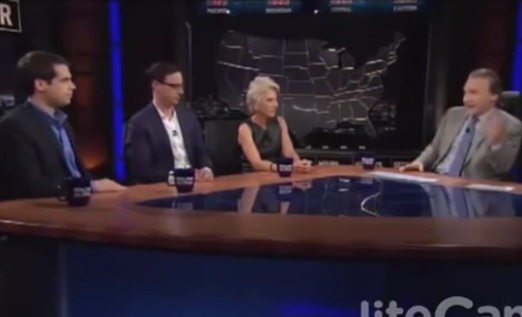
Four Jews, One Opinion on Israel

weinstein_silver_harman_maher

Bill Maher, Jane Harman, Jamie Weinstein and Charles Krauthammer agree. Somebody has to be at fault, and it can’t possibly be the Israelis.

“Liberal” Maher faults “the rest of the world” and even the “Palestinian civilians who are dying”. He describes the Israelis as “the victim of the soft bigotry of high expectations”. Their enemies, in contrast, he expects to just get over being expelled.

“Conservative” Krauthammer understands how these sneaky Palestinians think, playing up their weakness and exaggerating their suffering, counting on the “near-total historical ignorance and reflexive sympathy” of others. Krauthammer, after all, is one of the foremost experts in such matters.

“Liberal” Harman is a dimmer Maher. She agrees with Krauthammer. She advocates secure borders for Israelis, because she wishes them to have peace. She advocates exactly the opposite for Americans, no doubt because she doesn’t wish for us to have peace.

“Conservative” Weinstein is a dimmer Krauthammer. He too knows how these Palestinians think. All he thinks anyone needs to know is that they’re anti-jew. Never mind why.

Yockey on Culture and Race – Part 1

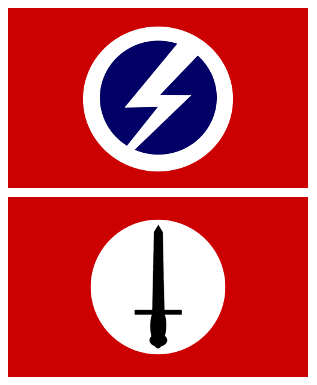
union_movement_european_liberation_front

Having reviewed Yockey’s understanding of European philosophy and liberalism we move now to his understanding of European culture and race.

An article by Anthony Gannon, who knew and worked with Yockey, appeared at Counter-Currents recently. Francis Parker Yockey, 1917–1960:

This pen-name was symbolic of the extremities of Europe as seen by Yockey; Ulick was an Irish name indicating the western boundary, whilst the Varange were nomadic tribesmen operating on the eastern fringes of Europe.

I will say no more on the disjunction between Yockey and Sir Oswald, as there is nothing constructive to be gained from raking over old ashes. Indeed, it is true that Yockey was disappointed that neither he, nor Imperium, found favor with the remnants of pre-War British fascism in general. He attracted the bitter and stupid hostility of Arnold Leese, the leader of the former Imperial Fascist League, along with his latter-day disciples such as A. F. X. Barron and company, The Britons, and sundry others of like mind. Of course, all of these groupings were equally opposed to Sir Oswald Mosley and his ideas — so there was no organized common front, per se, against Yockey; he was just someone else to hate. His sin in their eyes was to reject vertical race, rooted in 19th-century materialistic thinking, and to put in its place the 20th-century system of horizontal race — spiritual race. However, it is true beyond doubt that the main reason why so many of those who could have been expected to support Yockey’s ideas, did not do so for another reason — jealousy; jealousy of his intellect and ability. In every intellectual exchange between Yockey and others which I ever witnessed, Yockey always emerged the winner, and almost all of the losers never forgave him for this.

In almost every case, such people were visibly impressed by his intellect and power of expression and, certainly, they had never met anyone like him before. He was a talented pianist who could play the works of Chopin and Liszt in concert hall style, and with a fire and expression that was remarkable. Ladies liked Yockey, and he liked the ladies; they felt his magnetism and intensity and responded readily to both. Some of the people we met were German born, and with them Yockey would converse in German, without difficulty, most of them congratulating him on his grasp of the language and on his accent.

In spite of first impressions, if Yockey met some people frequently and for long periods, there was always the chance of a quarrel. He did not suffer fools gladly, and could become quite insulting and contemptuous to those he believed were being unduly obstinate or slow in conceding a point in dispute.

Oswald Mosley was the subject of a special program at the White network in July 2013. After WWII Mosley’s main theme was “Europe A Nation”. In 1948 he formed the Union Movement, whose political position is classified by Metapedia as National Europeanism and European Socialism:

the Union Movement attempted to redefine the concept by stressing the importance of European unity rather than narrower country-based nationalisms

In 1949 Yockey, Gannon and others who had split from Union Movement formed European Liberation Front, whose political position is classified by Metapedia as Social nationalism, European nationalism, Third Positionism.

The pan-European visions of Mosley, Yockey and others were holistic, rooted in a desire to promote the vitality and common interests of Europeans and European culture. In contrast, the European Economic Community (established in 1958) and European Union (established in 1993) effectively hijacked what Yockey called the Idea and delivered a distorted version, a purely economic and legal union whose effects on the unique biology and culture of Europe have been increasingly obviously disastrous. Contemporary nationalists rightly see the EU as a fraud – far from an expression of common interests the EU presents a shared existential threat to all Europeans.

For more information on Arnold Leese listen to Voice of Albion w/ Paul Hickman 4-23-14 at Renegade Broadcasting. Paul reads from and comments on Leese’s autobiography Out of Step – Events in the lives of an Anti-Jewish Camel-Doctor.

We consider Yockey’s views on culture and race starting at page 245 of Imperium, in the section he titled “CULTURAL VITALISM” and subtitled “(A) Culture Health”:

‘I recognize only two nations, the Occident, and the Orient.”

— Napoleon

“It is want of race, and nothing else, that makes intellectuals — philosophers, doctrinaires, Utopists — incapable of understanding the depth of this metaphysical hatred, which is the beat-difference of two currents of being manifested as an unbearable dissonance, a hatred that may become tragic for both.”

— Spengler

“I wanted to prepare the fusion of the great interests of Europe, as I had accomplished that of the parties. I concerned myself little with the passing rancor of the peoples, for I was sure that the results would lead them irresistibly back to me. Europe would in this way have become in truth a united nation, and every one would have been, no matter where he traveled, in the same Fatherland. This fusion will accomplish itself sooner or later through the pressure of the facts; the impulse has been given which, since my downfall and the disappearance of my system, will make the restoration of balance possible in Europe only by merger and fusion of the great nations.”

— Napoleon

Napoleon’s west/east “national” dichotomy is a geographic/administrative subdivision which traces back to Rome. The nationalities of Europe can be similarly but more aptly characterized and subdivided ethno-linguistically into Germanic, Italic and Slavic, which all trace back to the Aryans.

Race scientists of the 19th and early 20th centuries understood Europeans as a subset of the Caucasian race, which they subdivided according to physical and mental characteristics into Nordic, Mediterranean and Alpine races which roughly overlap and correspond to the aforementioned linguistic subdivisions.

Such coarse groupings fit somewhere in the continuum between the relatively tighter notion of nation and looser notion of continental-scale race.

Yockey regarded spirit and soul as paramount and preeminent over biology/materialism. Thus his emphasis on “the Western Culture” and “the Western civilization” rather than the European people, which he subdivided into two parts according to spirit: the masses and a much less numerous culture-bearing stratum.

Politics + Technology = Nonsense at the Speed of Light