Tag Archives: history

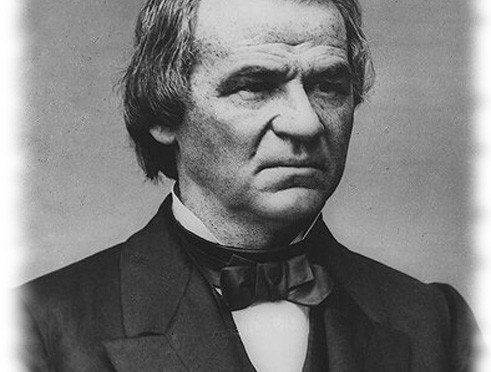
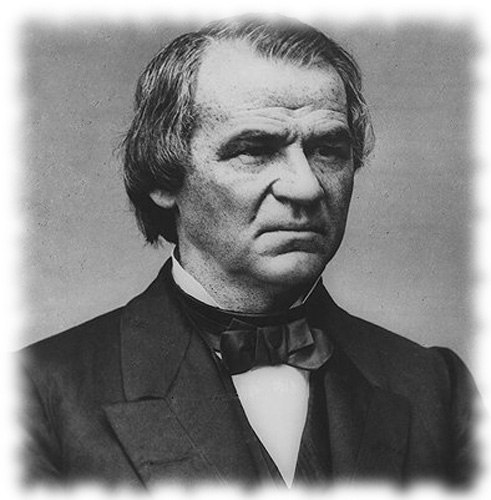
Andrew Johnson, White Nationalist

Jamie Kelso’s March 1st podcast brought to my attention the article “Andrew Johnson Reconsidered”, which was published in the March 1998 issue of Wilmot Robertson’s Instauration.

Though Johnson’s oratory was noted for its style, the substance was equally impressive. An outspoken man, to put it mildly, today he would be consigned to the ranks of the insensitive at best or the bigoted at worst. Some of his most amusing outbursts were downright racist. In terms of bombast, he could have given any black preacher a run for his money. Of a pro-black voting rights bill, he said:

It would place every splay-footed, bandy-shanked, hump-backed, thick-lipped, flat-nosed, woolly headed, ebon-colored Negro in the country upon an equality with the poor white man.

His racial philosophy left little room for interpretation:

This is a country for white men, and by God, as long as I am President, it shall be a government for white men …. This whole vast continent is destined to fall under the control of the Anglo-Saxon race-the governing and self-governing race.

His reasons for feeling as he did are well-documented:

[The] black race of Africa were inferior to the white man in point of intellect-better calculated in physical structure to undergo drudgery and hardship-standing, as they do, many degrees lower in the scale of gradation that expressed, the relative relation between God and all that he had created than the white man.

The following statement, made in 1866, cannot be easily dismissed today, 135 years after Negro emancipation:

The peculiar qualities which should characterize any people who are fit to decide upon the management of public affairs for a great state have seldom been combined. It is the glory of white men to know that they have had these qualities in sufficient measure to build upon this continent a great political fabric and to preserve its stability for more than ninety years, while in every other part of the world all similar experiments have failed. But if any­ thing can be proved by known facts, if all reasoning upon evidence is not abandoned, it must be acknowledged that in the progress of nations Negroes have shown less capacity for government than any other race or people. No independent government of any form has ever been successful in their hands. On the contrary, wherever they have been left to their own devices they have shown a constant tendency to relapse into barbarism.

Johnson didn’t mince words about the Negro problem. Even though there wasn’t much of a Jewish problem in the U.S. in those days, he was not loath to speak up whenever a Hebrew was in need of a dressing-down. Florida’s David Levy Yulee, the first Jew to serve in the U.S. Senate, was berated as a “contemptible little Jew.” Of Louisiana Senator Judah Benjamin (later to become Attorney General, Secretary of War and ultimately Secretary of State in the Confederacy), Johnson said, “There’s another Jew –­that miserable Benjamin! He looks on a country and a government as he would on a suit of old clothes. He sold out the old one; and he would sell out the new if he could in so doing make two or three million.” Benjamin was further lambasted as being of “that tribe that parted the garments of our Savior and for his vesture cast lots.” In pre-ADL days, however, such bold comments were not career killers. Of course, if we had speeches like that in Congress today, C-Span would be a real ratings puller.

As a baseborn white, Johnson instinctively distrusted the Southern planter class, which wielded so much power in western and central Tennessee. Johnson represented the mountainous, eastern part of the state, where the residents tended towards yeomanry. He found that no matter how high he rose in politics, no matter how prosperous he was in his private life, he was never accepted by his “betters.” His particular brand of populism may have been inspired as much by his own experience as by his reverence for the Constitution:

The aristocracy in this district know that I am for the people….They know that I love and desire the approbation of the freemen of this State….The fact of a farmer or mechanic stepping out of the field or shop into an office of distinction and profit, is particularly offensive to an up­ start, swelled headed, iron heeled, bobtailed aristocracy, who infest all of our little towns and villages, who are too lazy and proud to work for a livlihood [sic], and are afraid to steal.

Though easier said than done, his recommendations for a robust republic still resonate:

I want no rabble here on one hand, and I want no aristocracy on the other. Lop off the aristocracy at one end, and the rabble at the other, and all will be well with the republic.

His antipathy to the plantation aristocracy was not just class envy. Johnson blamed it for fanning the flames of secession for its own benefit-certainly not for the benefit of the poor whites who formed the core of his constituency and had to bear the brunt of battle after secession.

I am for a government based on and ruled by industrious, free white citizens, and conducted in conformity with their wants, and not a slave aristocracy. I am for this government above all earthly possessions, and if it perish I do not want to survive it. I am for it though slavery be struck from existence and Africa be swept from the balance of the world … .If you persist in forcing this issue of slavery against the government, I say, in the face of heaven, give me my government and let the Negro go!

In other words, the welfare of the country is more important than the status of the Negro, be he slave or free man. In Johnson’s time, as in our own, too many people of influence and power have these priorities reversed.

It isn’t clear from the article which of Johnson’s quotes came before, during, or after his term as president in the wake of America’s most fratricidal, uncivil war. At the very least readers today can see that 90-odd years after Thomas Jefferson asserted the “self-evident truth” that “all men are created equal” there were still White leaders at the very top who believed Whites could and should govern Whites “to ensure the blessings of liberty to ourselves and our posterity”. You know, the kind of thing recent US presidents believe about jews.
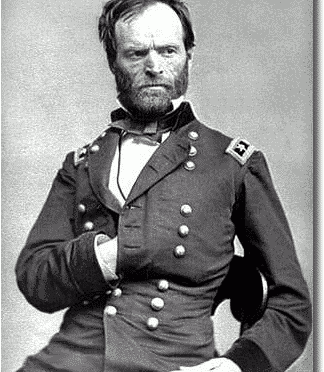
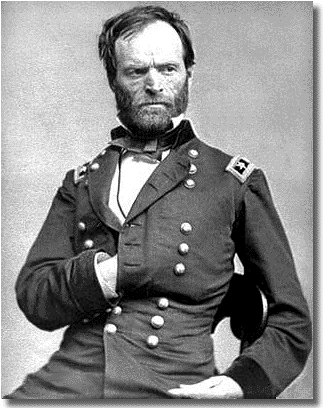
Sailer on Sherman

In “Depression v. Nervous Breakdown”, Sailer writes:

I noticed this when I was reading up on the Civil War and got to the formidable Gen. William Tecumseh Sherman’s psychological collapse in late 1861, in-between his strong performances at the battles of First Bull Run in 1861 and Shiloh in 1862. While organizing behind the lines for the next year’s campaigns, he had to be relieved of command so he could recuperate at home. Sherman later joked, “Grant stood by me when I was crazy, and I stood by him when he was drunk, and now we stand by each other.”

The Wikipedia page on Sherman uses the old-fashioned term “nervous breakdown” and blames “the concerns of command.” In contrast, James M. McPherson’s Battle Cry of Freedom sometimes uses the more modern term “depression,” and at one point suggests that Sherman was depressed by his vision of the logic of Total War.

Or was he suffering Post-Traumatic Stress Disorder over Bull Run?

Maybe Sherman was depressed because he realized Total War would someday result in the rise to power of pushy, hostile jews and the subsequent colonization of the entire White world by unarmed Amerindian, African, and Asian peasants. Then again, it isn’t likely Sherman would have ever recovered and continued to kill his cousins if he realized that.

General Grant’s Infamy:

The Jews, as a class violating every regulation of trade established by the Treasury Department and also department orders, are hereby expelled from the department [the “Department of the Tennessee,” an administrative district of the Union Army of occupation composed of Kentucky, Tennessee and Mississippi] within twenty-four hours from the receipt of this order.

Hate, Then and Now

Consider the position of the American Indians at the present day. They live side by side with a people which always wishes to increase in numbers, to strengthen its power. They see thousands of ships passing up and down their waterways. They know that the strength of their masters is irresistable. They have no hope whatever of seeing their native land one day delivered from their conqueror; their whole continent is henceforth, as they all know, the inheritance of the European. A glance is enough to convince them of the tenacity of those foreign institutions under which human life ceases to depend, for its continuance, on the abundance of game or fish. From their purchases of brandy, guns, and blankets, they know that even their own coarse tastes would be more easily satisfied in the midst of such a society, which is always inviting them to come in, and which seeks, by bribes and flattery, to obtain their consent. It is always refused. They prefer to flee from one lonely spot to another; the bury themselves more and more in the heart of the country, abandoning all, even the bones of their fathers. They will die out, as they know well; but they are kept, by a mysterious feeling of horror, under the yoke of their unconquerable repulsion from the white race, and although they admire its strength and general superiority, their conscience and their whole nature, in a word, their blood, revolts from the mere thought of having anything in common with it.

Arther Gobineau, circa 1854, p121 of The Inequality of Human Races, copyright 2009 by General Books LLC.

ENVY

The concept of envy — the hatred of the superior — has dropped out of our moral vocabulary …

The idea that white Christian civilization is hated more for its virtues than its sins doesn’t occur to us, because it’s not a nice idea. …

Western man towers over the rest of the world in ways so large as to be almost inexpressible.

It’s Western exploration, science, and conquest that have revealed the world to itself.

Other races feel like subjects of Western power long after colonialism, imperialism, and slavery have disappeared.

The charge of racism puzzles whites who feel not hostility, but only baffled good will, because they don’t grasp what it really means: humiliation.

The white man presents an image of superiority even when he isn’t conscious of it. And, superiority excites envy.

Destroying white civilization is the inmost desire of the league of designated victims we call minorities. …

~ Joseph Sobran (Sobran’s — April 1997)

(As quoted by Landser at OD.)

Shocking Old News

In addition to reporting and opining on the latest developments in the ATCGs of human differences, n/a at race/history/evolution notes has a gift for finding and exposing historical evidence of the long struggle between race-realists and race-deniers.

Quoting Jonathan P. Spiro in Grant vs. Boas:

These students of Boas set about devising the intellectual weapons and amassing the ethnographic data they would need to combat the disciples of Grant. And while on a theoretical level the debate between the Grantians and the Boasians pitted the defenders of heredity and biological determinism against the proponents of environment and the primacy of culture, it was difficult not to notice that it was at heart a confrontation between the ethos of native Protestants and the Zeitgeist of immigrant Jews.

Quoting Gelya Frank in Boasianism as a cult:

THERE HAS ALWAYS BEEN a lively, if sometimes hushed, in-house discourse about American anthropology’s Jewish origins and their meaning. The preponderance of Jewish intellectuals in the early years of Boasian anthropology and the Jewish identities of anthropologists in subsequent generations have been downplayed in standard histories of the discipline.

There has also been a whitewashing of Jewish ethnicity, reflecting fears of anti-Semitic reactions that could discredit the disci- pline of anthropology and individual anthropologists

Now I’m shocked, shocked to discover that jews, especially supposed professionals dedicated foremost to the study of man’s tribalism, could so whitewash the full extent of their own tribe’s dominance of that field until so long after the fact. Doubly shocking is the excuse, which is of course that “the anti-semites” made them do it.

Actually I’m well beyond shock, as the more I’ve examined the subject the more commonplace and even banal such revelations have become. Today, looking back at what transpired in the hundred years or so since the Grant/Boas struggle, I’m compelled to make two points:

1) The Boasians, prevailing as they did, have produced as a consequence a social and academic environment which is anti-racist only in name. The regime is in fact as race-based as ever, the discrimination has only been reversed. Today it is perfectly acceptable to be anti-White, and horribly taboo if not illegal to be “anti-semitic”.

2) Those who opposed the Boasians, to the extent they saw and objected to the self-serving jewish agenda and feared for the future of their posterity, were correct. And if it’s proper to label them and those of us who continue to struggle “anti-semites”, then it’s only fair to recognize that our opponents were and still are anti-White. It conforms to their own name-calling standards and, more important, accurately reflects the empirical results of their words and actions.

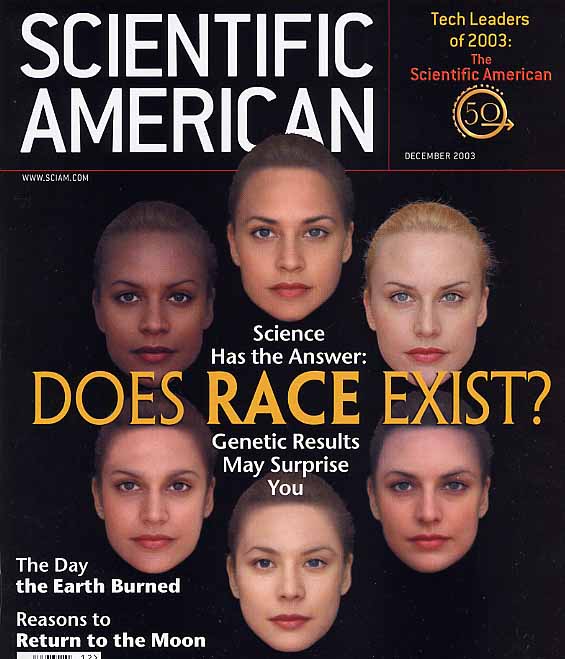
The image above is from Race: Reality and Denial by Richard McCulloch.

Not the Last Brainwashing

Letter to the White Race, ostensibly written from the point of view of a non-white, provides a fair summary of how impotent and defeated Whites have been made to appear.

This is facilitated by decades of brainwashing, beginning in early school years, portraying Whites not as the builders of a great civilization, or the admirable leaders of the Free World, but in a lopsided, entirely slanted way as oppressors, enslavers, genocidal “Nazis”, southern Klansmen, imperialistic Colonials, and toothless hillbillies just itching for a chance to lynch the first colored individual that comes along. This brainwashing not only inflames the minorities in these now racially-mixed “schools”, but also inculcates a sense of “White guilt” that the Out Group finds particularly useful in maintaining control.

Tonight I watched a prime-time television documentary called The Last Lynching:

Just weeks before the history-making 2008 presidential election, the first in which any political party has nominated an African American as its candidate, Discovery Channel presents a one-hour special on race in America. Some commentators are now speaking of a “post-racial” period in American history. While the nation has come a long way on the road toward racial equality, there is still much left to accomplish.

It is a prime example of Out Group brainwashing.

The documentary focuses on a Ku Klux Klan-related murder that took place in Mobile AL in 1981. Ted Koppel, who is jewish, interviews 1960s “freedom rider” and current congressional representative from San Diego, Bob Filner, who is jewish, and the SPLC’s founding hate-crusader Morris Dees, who is jewish. The moral of the story: Whites are lynch-happy racists – but we can redeem ourselves by voting for Barack Obama.

Daniel M. Gold writes in his New York Times review: “The past is never dead. It’s not even past.” And concludes his critique-free review with this:

In these accounts Mr. Koppel offers inspiration and a tribute to an event — the nomination of a black presidential candidate by a major party — that many had not expected in their lifetime. Yet “The Last Lynching” also conveys how close to the surface racial resentments can lie, and how easily they can be channeled into blind rage. In the end the program is as much cautionary tale as celebration.

Racial resentments indeed. This documentary is an excellent example of anti-White resentments motivating jews to not-so-subtly nurse black victimology and channel black resentments against Whites. When their man doesn’t win in November, whose “blind rage” is more likely to spill over? The blacks polling 95-1 for Obama and threatening race riots, or the Whites polling 55-40 for McCain who dare not make a peep about jews like Harold Meyerson who openly say “whiteness is a huge problem”.

In The Last Lynching the mendacity begins at the beginning with a cliched glossing over of the history of lynching in America. Quickly flashing images and carefully selected words convey the impression that only blacks were hung, and that none of it was just or warranted. Some 5000 who were lynched between the civil war and the 1930s are described only as “victims” – as if they were all selected at random, or simply because they were black. There is scant mention of the victims whose rape or murder instigated more than a few of the lynchings.

In glossing over this past Koppel even brazenly refers to The Birth of a Nation, a 1915 film that tells a quite different story from his own. Koppel and friends used snippets of the film to flesh out their characterization of hooded Klansmen mindlessly murdering random negroes. They’re counting on modern day viewers not to know the film’s story and not to know that the Klan rose from the post-war chaos in reaction to the depravities and injustices visited upon southern Whites. As late as 1915 most Whites still knew this history and celebrated the KKK, but even by then racial resentments were brewing:

When Griffith released the film in 1915, the National Association for the Advancement of Colored People (or NAACP) and other groups protested; the NAACP published a 47-page pamphlet titled “Fighting a Vicious Film: Protest Against The Birth of a Nation,” in which they referred to the film as “three miles of filth.” W. E. B. Du Bois published scathing reviews in The Crisis, spurring a heated debate among the National Board of Censorship of Motion Pictures as to whether the film should be shown in New York. However, President and former history professor Woodrow Wilson viewed the film at the White House and proclaimed it not only historically accurate, but like “history writ with lightning.” Like Woodrow Wilson, many whites felt it a truthful and accurate portrayal of racial politics, so much so that they flocked to join the rejuvenated Ku Klux Klan. The years after Griffith released The Birth of a Nation saw massive race riots throughout the country, peaking especially in the North in 1919; many historians lay the blame for this racial conflict on Griffith’s The Birth of a Nation.

What happened between then and now? Well understanding that the early NAACP was organized, funded, and led by jews helps explain. It seems WEEJs (white eastern European jews) had an axe to grind with the WASP elite. It seems these WASPs were a wee slow in handing over control of the nation their forefathers gave birth to. After almost a century of “culture war” those busy little WEEJs are still grinding away. Today “KKK” is an epithet, and jews are making documentaries to explain how the ever expanding racial conflict they’ve poured gasoline on is all for the better. The only threat to their utopia are racist Whites itching to once again start lynching at random.

If jewish influence in the media were not so strong, or if jews did not so uniformly resent Whites, then perhaps today’s mainstream journalists and pundits would not so strongly and uniformly insist on inverting reality. The reality of post-KKK, post-Jim Crow, post-White, jewish-dominated America is black on White violence:

The Color of Crime
New Century Foundation, 2005

Mapping The Unmentionable: Race And Crime
February 13, 2005
By Steve Sailer

CRIME IN THE HOOD
La Griffe du Lion
November 1999

THE RACE WAR OF BLACK AGAINST WHITE
Paul Sheehan
From the Sydney Morning Herald, May 20, 1995

Guy White calls out “liberal” Tim Wise on his “lying” and “false logic” about this reality. Guy makes sense, except in failing to note that Tim Wise is a jew who makes a living channeling racial resentment towards Whites. Jewish race-based indifference, hostility, and even genocidal feelings toward Whites, no matter how hard we might wish to avert our eyes and pretend jews are “White Like Me”, is another harsh reality the media won’t discuss.

One final thought.

If an atypical murder from 1981 rates a prime-time documentary, then when might Ted Koppel make a documentary exploring the racial resentments behind the quadruple murder in Wichita, the rape/torture/murder of Christopher Newsom and Channon Christian, or the sickeningly common racial murder and rape of White women in America? When might Bob Filner spend time on a bus or in a jail cell for the benefit of White victims of racial violence? When might Morris Dees hound black rapists and murders in court?

I think they’ll get around to these things right after making a documentary guilt-tripping jews for their involvement in the biggest fraud in history.

In other words: never.

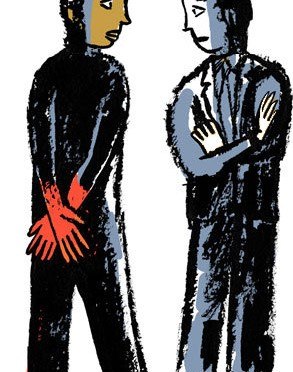
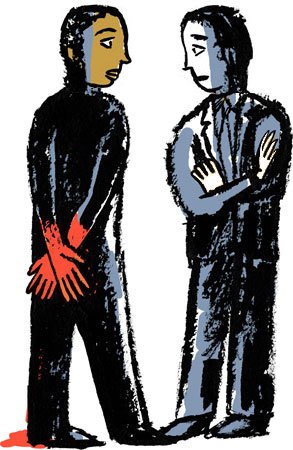
UPDATE 15 Oct 2008: The image at the top of this post is a corrected version of the reality-inverting original that was attached to a Slate essay from May titled In Praise of Liberal Guilt – It’s not wrong to favor Obama because of race. In that essay Ron Rosenbaum, who is jewish, delivers virtually the same message as Koppel/Filner/Dees: Whites should feel guilty because of slavery, lynching, and Jim Crow. We should feel guilty about it forever. And because of it we should vote for Obama.

He also neglects to address the black on White violence occurring today.

What a coincidence.

We must recognize these attempts to guilt-trip us for events that occurred generations ago, to libel and damn us forever because of the race we are born into. We must recognize that these smears are not only false, they represent attacks made by people who wish us ill.